Water Eaton Copse, Nr Hannington, Wiltshire. Reported 12th May.

Map Ref: SU139930

This Page has been accessed
Hit Counter


Updated Wednesday 16th  May 2012


AERIAL SHOTS GROUND SHOTS DIAGRAMS FIELD REPORTS COMMENTS ARTICLES
12/05/12 12/05/12 12/05/12 16/05/12 12/05/12 12/05/12

Field Report from Water Eaton (1)  Saturday 13th June 3pm - 5pm 

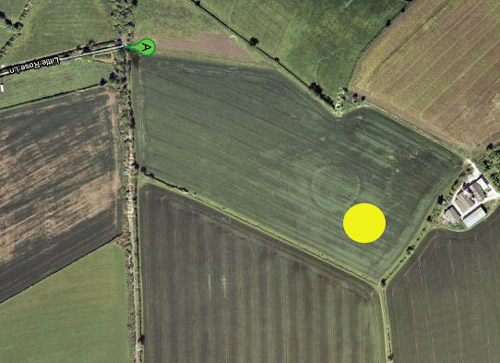
The end of the nearest roadway, Little Rose Lane (parking for only 3 cars), finds you at the SW corner of the field of oilseed rape in question. I walked approx. 900m clockwise around the field to find the formation in the NE corner. The Google satellite pic reveals crop marks of an ancient enclosure now destroyed, and the formation lies right next to this.

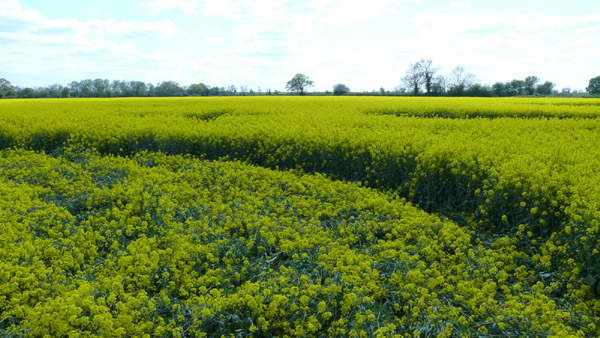
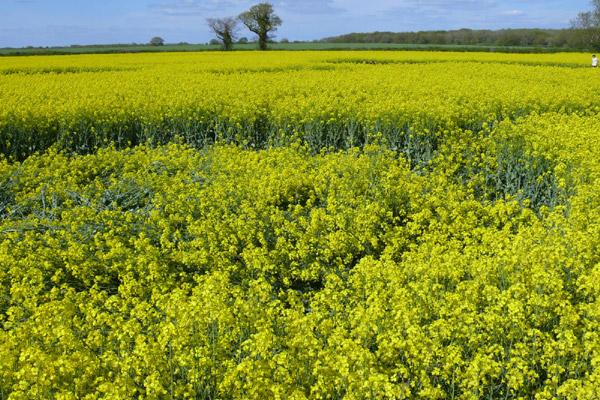
From the field edge it was hard to see any trace of the circles for those under 1.80m tall as the crop is nearly chest high. Whoever was in there before us was very careful; the tramlines were hard to find and there was no established pathway in. As usual it seemed it would have been impossible to get any idea of the pattern without the aerial photos, and even with them it was a labyrinth due to the height of the crop.


CLICK HERE FOR THE LATEST CROP CIRCLE CONNECTOR DVD


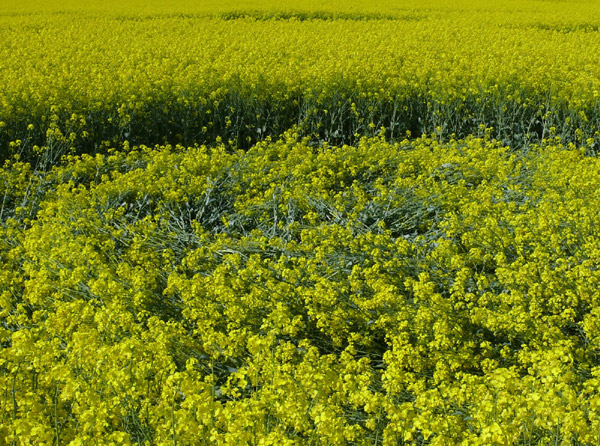
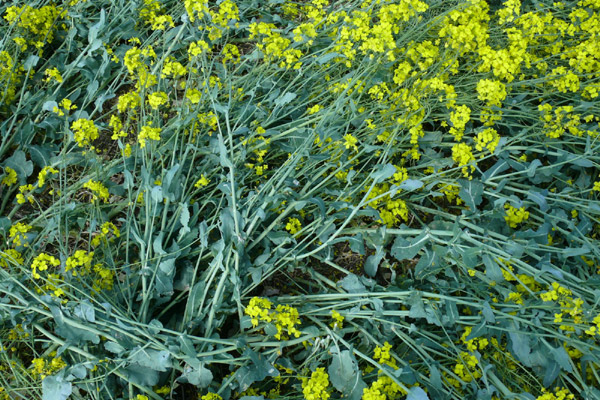
This was my first fresh rapeseed formation so I'm conscious I might not be the best reporter. But to me it seemed very little trampled and the whole formation was light and airy. People had walked around the edges of the circles and rings and much of the laid crop was fresh and springy. What looks from the air like flattened crop is really only softly bent over half way.

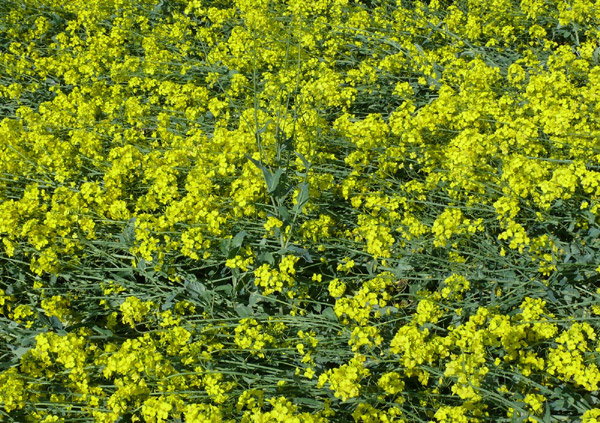
The general lay was clockwise around the circles and the normal clumping effect seen in oilseed rape was apparent, whereby the alternating bunches of flowers and stems conceal any underlying pattern, so that the rings disappear where they pass through the various satellite circles. As well as the general large scale swirling, there were areas of localised 'whirls' such as are often seen at the centres of corn circles, but vaguer. They look clearer on Bert's pole shots I think. 


Discuss this circle on our Facebook

Crop Circles-UFO's-Ancient Mysteries-Scientific Speculations


The edges of the circles were quite messy and I noticed that this was partly because of the scale effect of the larger less densely planted stems as compared with corn which allows a more precise imprint to be formed. Also the circle making force seemed to have had more effect on the more slender stems, so that sometimes a strong stem near the edge remained upright, while a weaker stem was bent, even though it lay further out from the centre.

However, in many places there were also entirely unaffected stems growing up through the middle of flattened stems, as is often seen in corn circles these days. I noticed that these were sometimes less mature stems, in other words the flowers were not so fully out and therefore the heads were lighter. However it was hard to take good photos of this as there was little contrast in the sea of green and yellow.

I always like to see these stems standing up as they confound those cynics who still think that crop circles are made by old men with planks and garden rollers!


Make a donation to keep the web site alive... Thank you


Of course these never-flattened stems are not to be confused with regrowth towards the light after flattening; this was also visible in some places, always from minor side stalks.
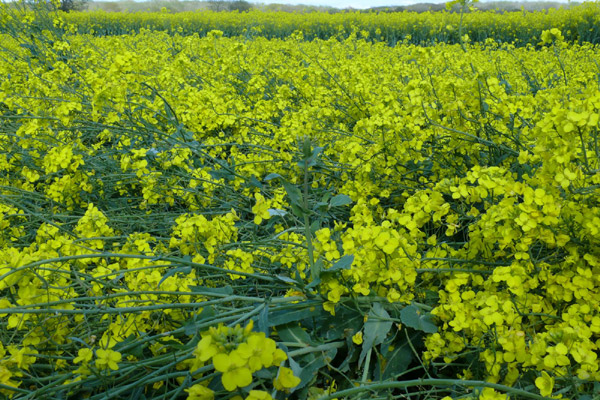
This effect was more noticeable in the largest circles for some reason. From my own experience as a grower I know that these side-shoots can put on 10cm a day in ideal conditions, but that still suggests that the formation was laid down at least 3 days ago and makes me wonder why there weren't more of them to be seen. 

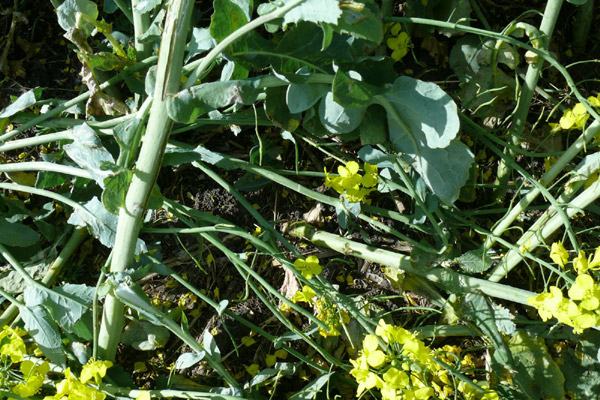
Looking now at ground level, the stalks were mostly softly bent in the region 5 cm - 10 cm above the ground,
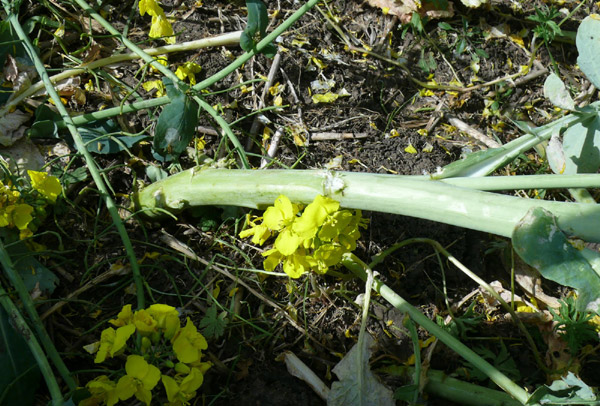
but also there were plenty of stems which were bent over right at ground level i.e. the soil was loose enough to permit movement to take place more readily at the soil surface.

The rapeseed is still very pliable at this time of year and I was able to reproduce both these effects on plants outside the formation by hand, without visibly damaging the stems. However it was a very different effect where people had walked as there the stems were often broken (this was also visible even where we walked down the tramlines). 

Obviously it's impossible to be totally sure about the pristine state of the crop unless one knows one is first into the field after discovery, and I am admittedly a novice at rapeseed, but my impression was very favourable and I saw nothing which made me question the genuineness of this lovely formation.

Graham


FOR VISITING THE CROP CIRCLES.


JOIN THE CROP CIRCLE CONNECTOR MEMBERSHIP NOW ONLINE

Click above to join the Crop Circle Connector Membership


BACK

  
Mark Fussell & Stuart Dike