FIELD REPORT
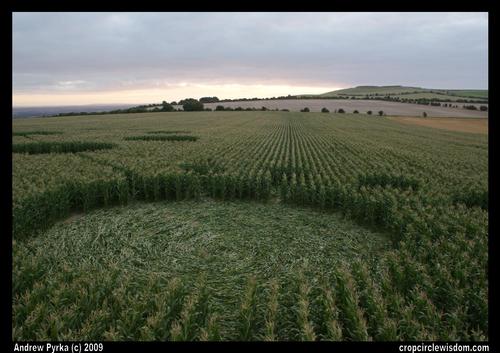
On 29 August, I
received Mark Fussell’s ‘crop circle rumour’: a formation in
corn (maize) at Uffington, west of the White Horse. I drove
there and met up with French photographer and researcher
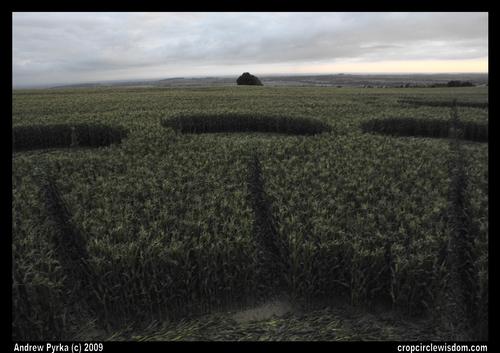
Olivier Morel. From atop the hill we could clearly see the
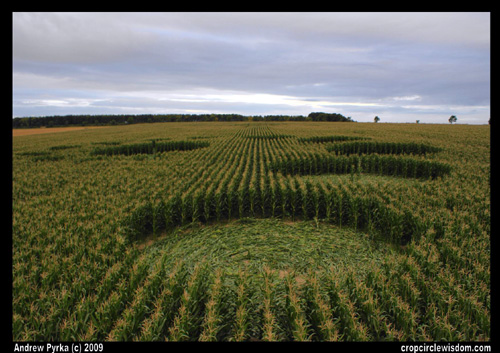
formation, consisting of quite a large number of circles,
varying in size and forming a pattern that looked like a
large S. We could see 3 large circles and many smaller ones
surrounding those 3.
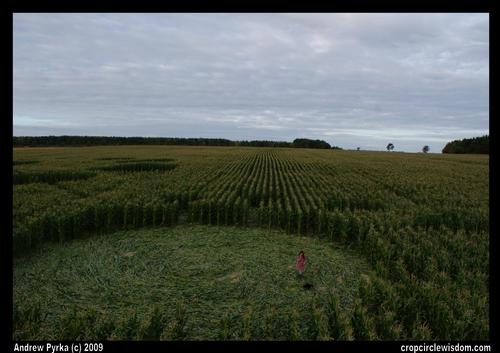
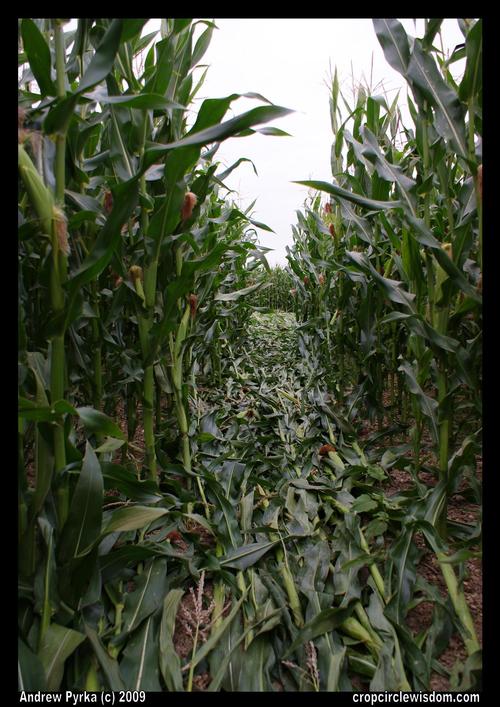
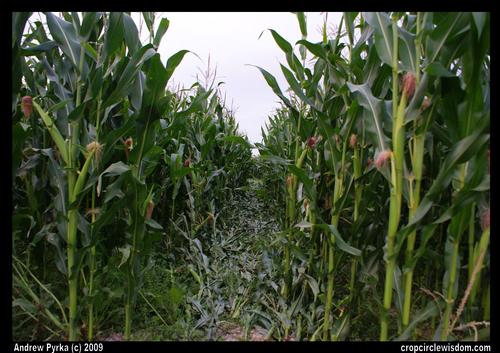
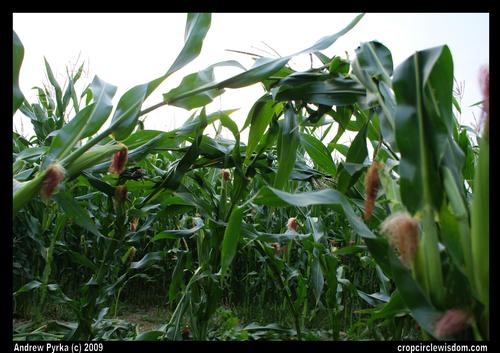
It is extremely difficult to find a
formation in tall corn (approx. 2.5 metres/8 feet!)
Even though we had
located it from the hill top and we knew we had to count
four trees backwards before entering the field, we searched
for almost an hour; at times I got the feeling that we were
completely lost in what seemed like a dense forest. Finally,
using our cameras ona pole, we managed to properly locate
the formation and stepped into what was our first corn
formation…
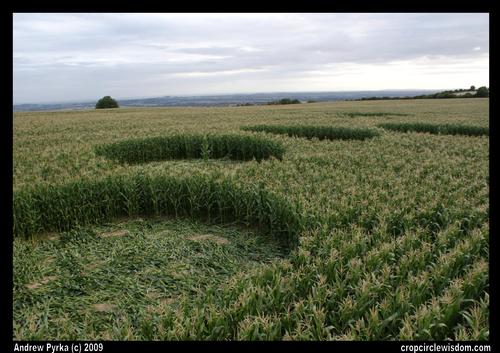
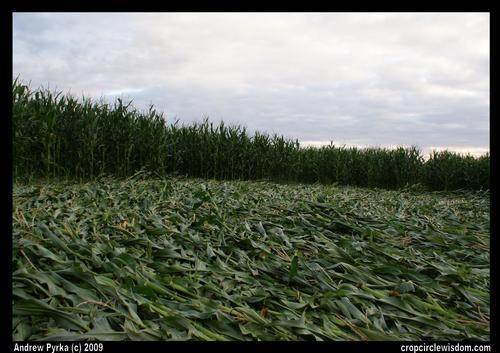
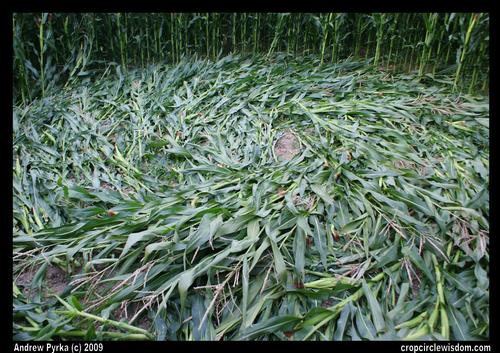
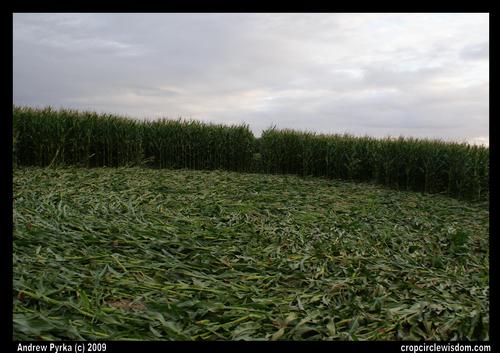
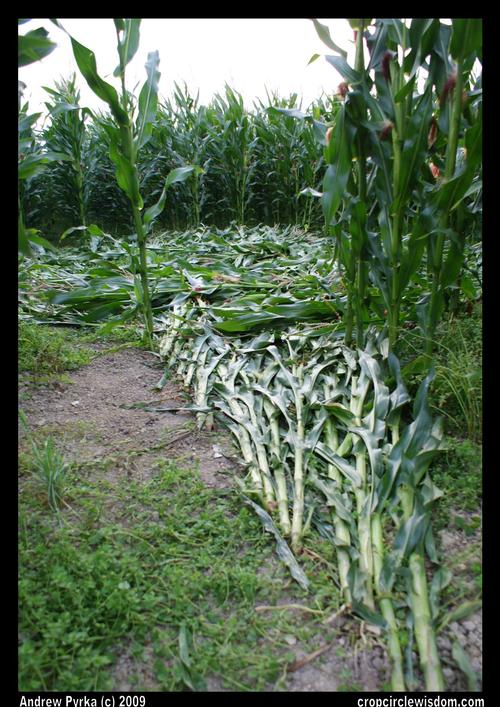
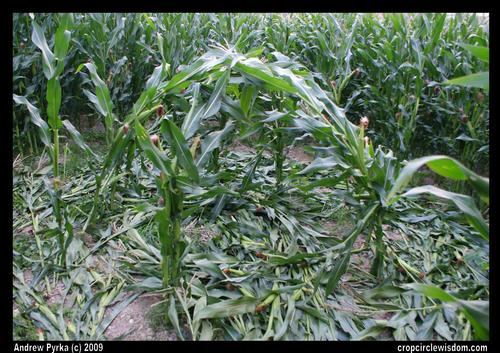
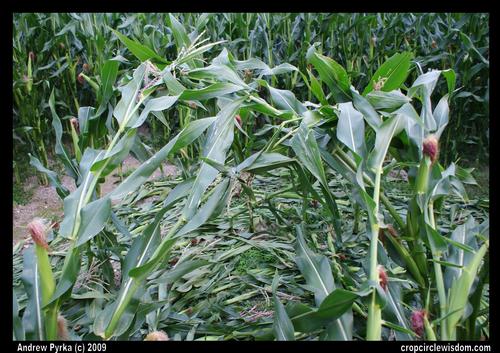
I was somehow shocked
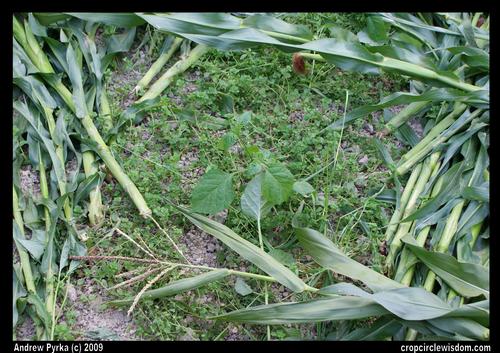
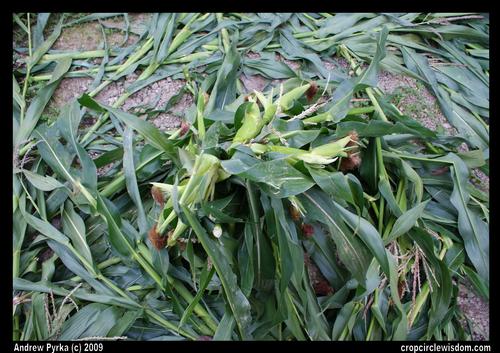
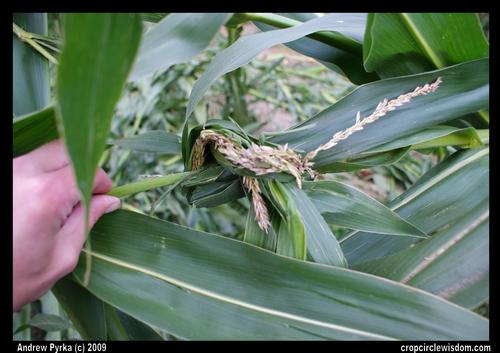
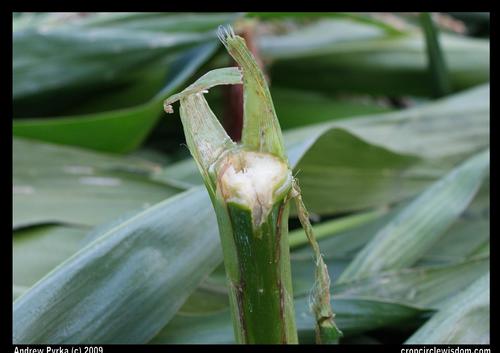
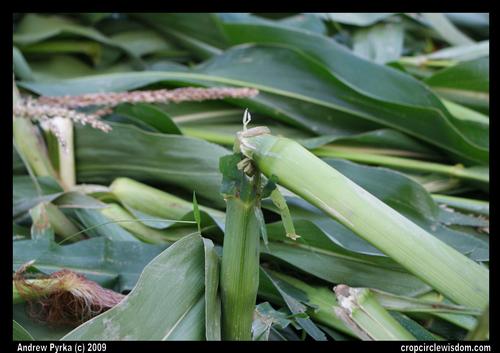
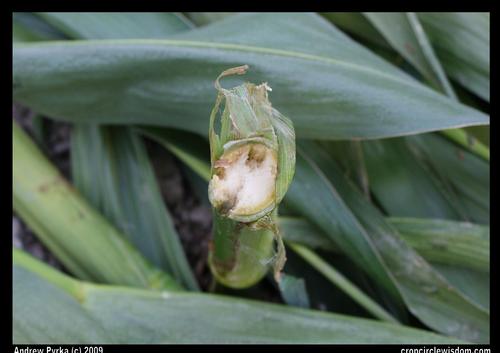
by what I saw: the corn plants were severely damaged. Most
were ripped at the base (although at different heights),
others were torn out of the soil with roots and all, and yet
others seemed like they were neatly cut with a knife.
“Weapons of mass destruction” is what came to my mind.
If this was the real
phenomenon, it had failed to be subtle; these plants would
not survive...
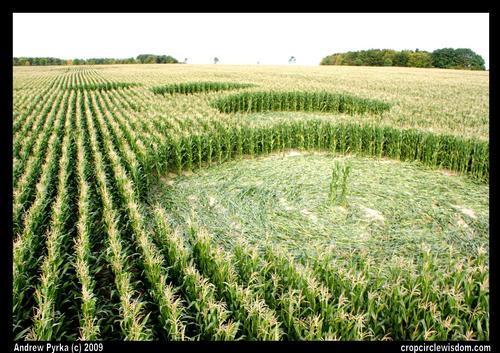
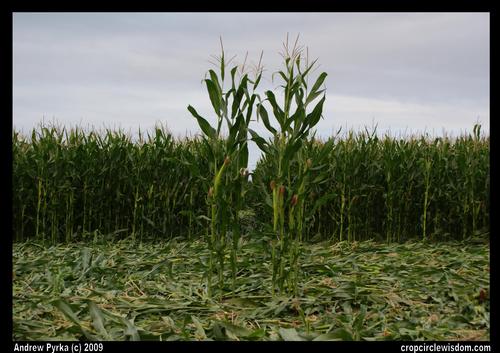
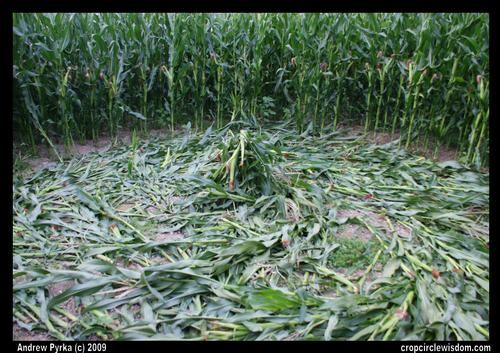
There were some very
interesting features however. The two outer circles
contained 11 bars/pathways that ended with circles varying
in size. From small to large, they surrounded the 2 large
circles, thus forming an S-shape which seemed quite
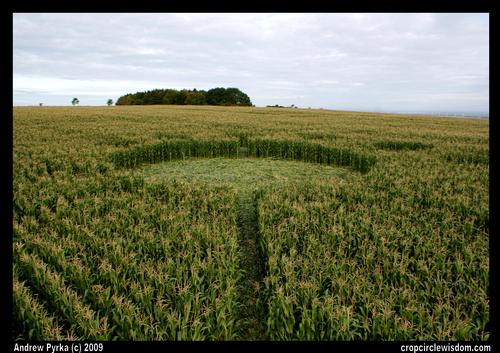
intricate. The inner large circle contained 2 tufts of
standing plants, surrounded by a nice swirl of flattened
plants. Some of the smaller circles had surprising features,
such as a tipi, off-centred swirls, multi-layering and even
a tent! The latter reminded me of the one built of willows
in the garden of the Silent Circle Café at Compton Bassett.
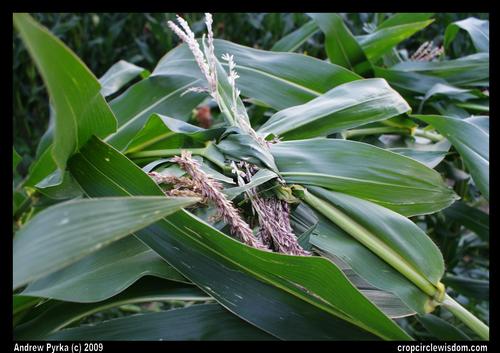
At first sight I was in awe, but upon closer inspection,
some the knots with which the stems had been tied together
looked highly ‘suspicious’: one was simply a double knot
which seemed utterly man-made.
We found many
footprints, although that doesn’t mean much. They could have
been left behind by previous visitors or even by the farmer,
after all the formation was clearly visible from the white
horse hill top. Yet, in order to actually find it one had to
be quite focused and determined due to the size and density
of the crop, which pointed once again in the direction of
hoaxers. After all, most serious researchers have gone home
by now, and tourists are not likely to go through the
trouble of searching in the way Olivier and I had…
In short: the formation – being large
and intricate – truly impressed me. Some features make me
think it’s man-made: the many footprints, the damaged
plants, the absence of biophysical anomalies, and the
suspicious details such as the knots in the ‘tent’. Also,
both Olivier and I felt no energy present.
On the other hand, if
the formation was indeed man-made, how could we explain the
intricacy, the multi-layering, the fact that some stems had
been missed by the flattening force, whereas they were only
inches away from those that laid flat on the ground? Why
were some nettles still standing, as if completely ignored
by the flattening force? When I tried to push them down with
my foot in order to see if they would fling back up again,
they broke…
I cannot compare this corn formation
with other corn formations, as this was my first. I can only
say I truly enjoyed the experience of being in a large corn
formation, in a gorgeous late summer afternoon, followed by
a lovely meal in the nearby village inn. Life is good…
Janet Ossebaard, 2009 |