Hannington, nr Cricklade, Wiltshire. Reported 7th May.

Map Ref: 

This Page has been accessed
Hit Counter


Updated Tuesday 10th May 2011


AERIAL SHOTS GROUND SHOTS DIAGRAMS FIELD REPORTS COMMENTS ARTICLES
08/05/11 08/05/11 10/05/11 12/05/11 10/05/11 08/05/11

Image Lucy Pringle Copyright 2010


Thursday 12 May 2011 

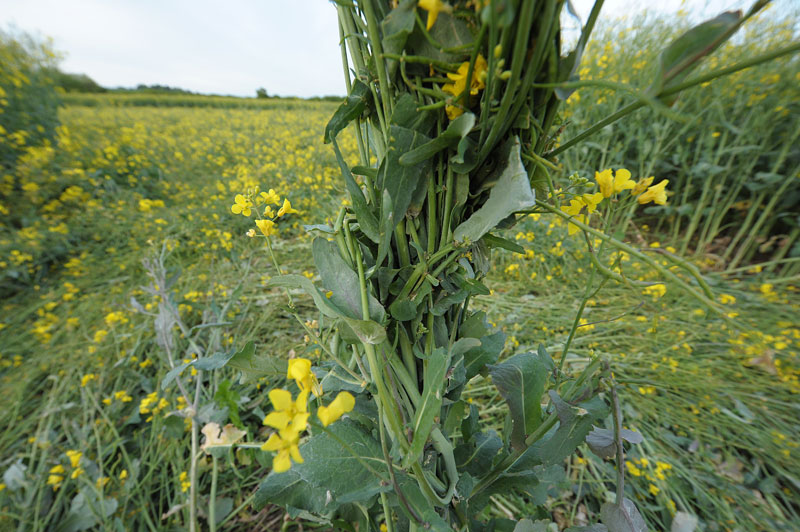
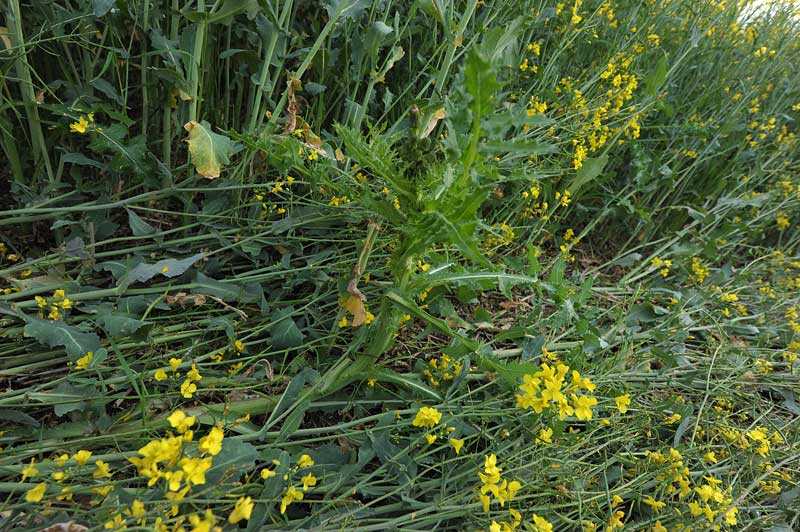
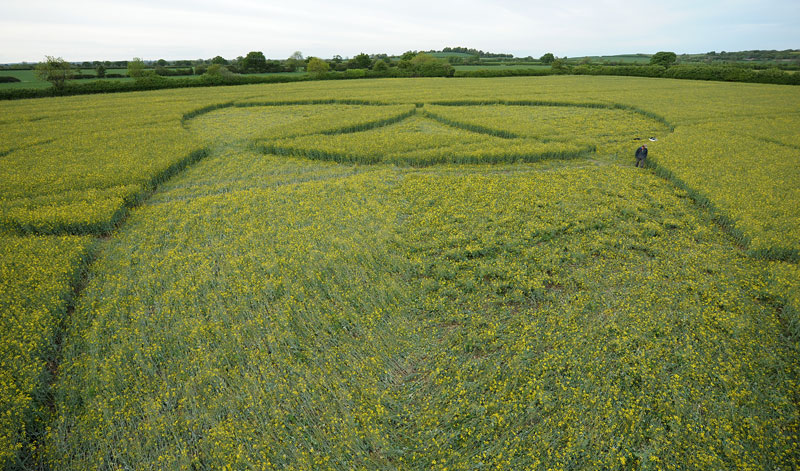
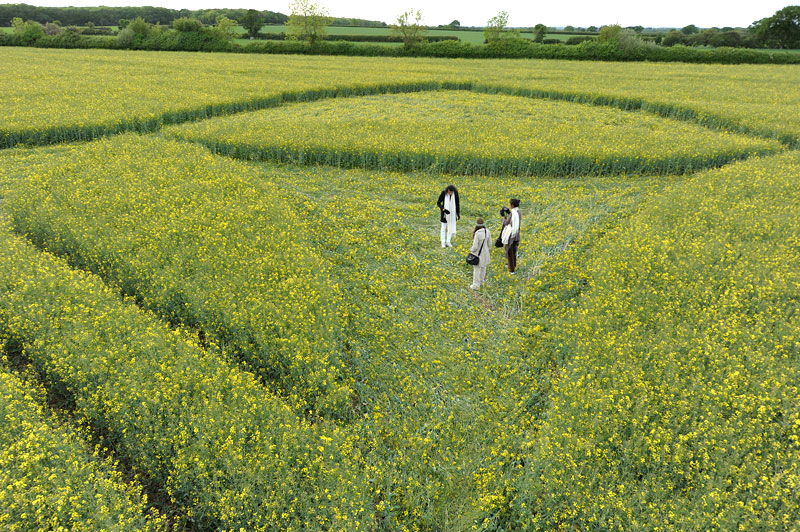
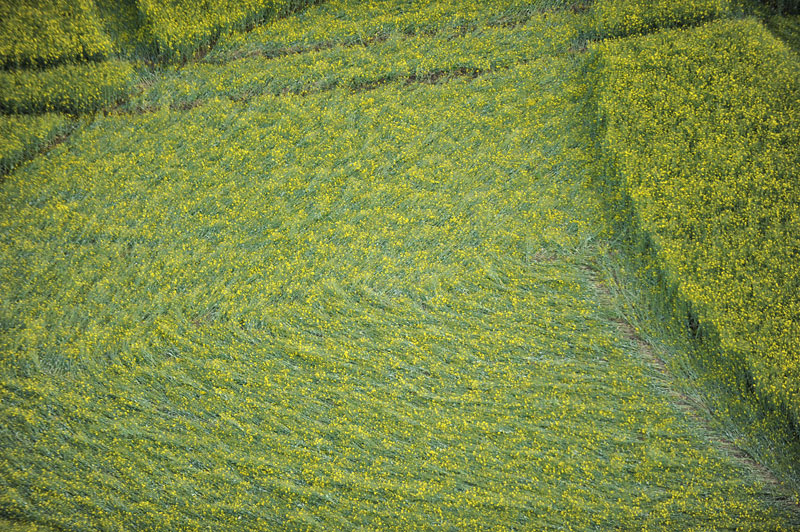
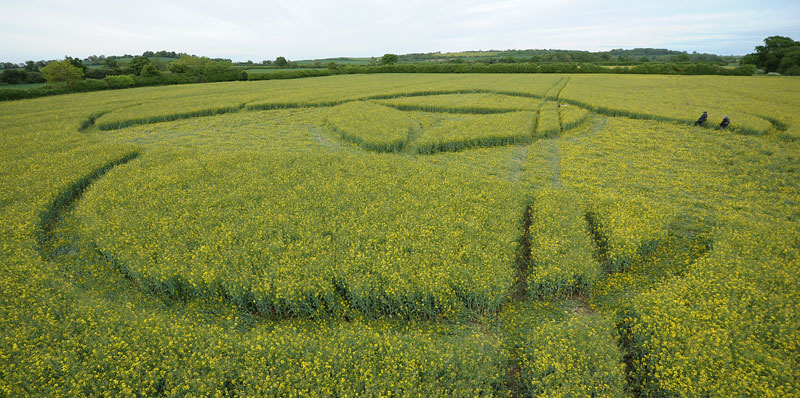
The formation in rapeseed at Hannington, near Cricklade  is a truly beautiful and delicate design in the unwieldy medium of rape and we should be grateful to have such a fine symbol early in the season. I went to see it yesterday. By the looks of it and in particular the growth of the downed stems, in particular of a weed caught up in the design, it looks as if it has been there for well over a week. The farmer told us that since its posting on the Net, many visitors had gone to see it, so it was not in pristine condition. We would like to thank him for allowing us to enter the field.  I just have to point out that over the years I have visited a great many crop circle designs with not a  few in rape. 
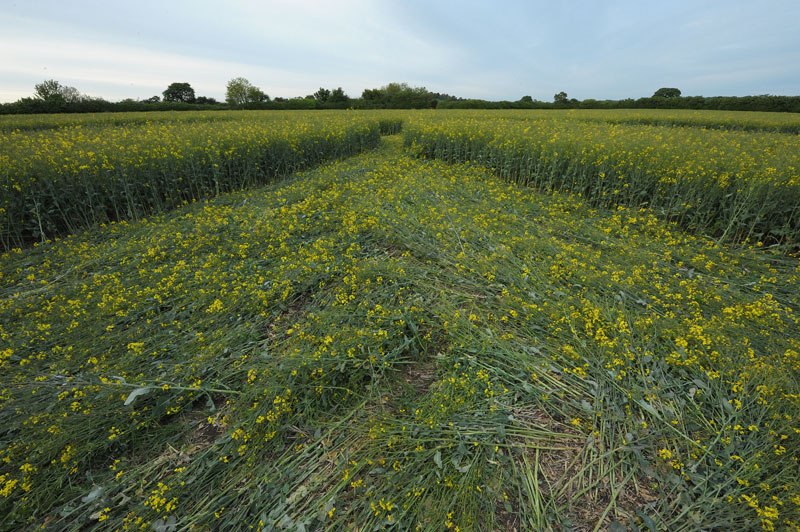
 

Oilseed rape is a plant from the cabbage family that can snap like cabbage stems do when fresh. In addition, unlike a wheat field where the stems are quite soft and stand apart from one another, oilseed plants have foliage which makes them bunch together, making the field look more like a sheep’s coat than a field of crops. In actual fact, although looking beautiful from afar,  fields of rape can be quite mangled.  It is not easy to walk into a field of rape and following the tramlines to access the design is difficult enough as a rule, although in this particular design the crop was more sparse. To do a design by hand you would have to walk through the standing crop, and very precisely at that, as the series of circles in this design which are based on sacred geometry, demonstrate. Bearing in mind that the design is over 220m in diameter, it would be a big and tiresome job to tackle and for what purpose? To make fun at us?  Isn’t the joke running a bit thin?


Some plants were damaged but the majority of stems and flowers were not. Markings on the bloom of standing stems, misleadingly labelled as stump board marks, can occur just by lightly touching them and could have been made by the neighbouring plants brushing against their neighbours when falling down. In this design the vast majority were unmarked.


The idea  that a complex design such as this one could have been made in rape by hand is not realistic and I wish that people local to this area would refrain from attempting to discourage those visiting your website who live abroad and rely on us for their information. 

Francine Blake www.wccsg.com

Images Olivier Morel / WCCSG Copyright 2011


Please find attached images of the Blunsdon formation I visited this evening. In my opinion, man made, reasons for this as below.....
 
Having travelled from my place of work in Swindon, I made my way along country lanes through the village of Blunsdon. Forget you Satnav, this place is off the map!!..... to find it you will need an OS map. I travelled 3 - 4 km down single track road until I came to it's end. From here it becomes cycle route/footbath/bridle way. I parked the car, grabbed my stuff and set off on foot, knowing I still had a walk of at least 2km ahead of me.
 
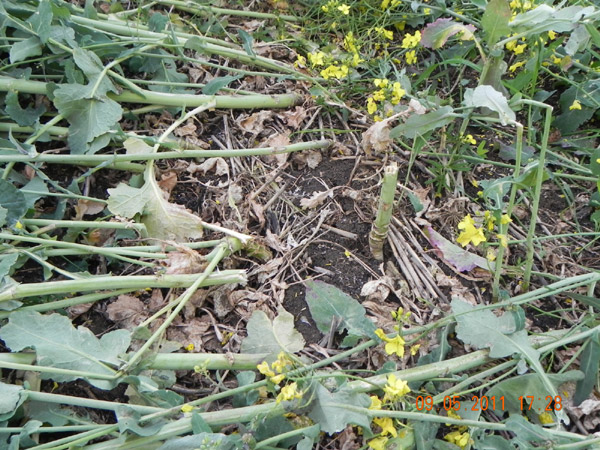
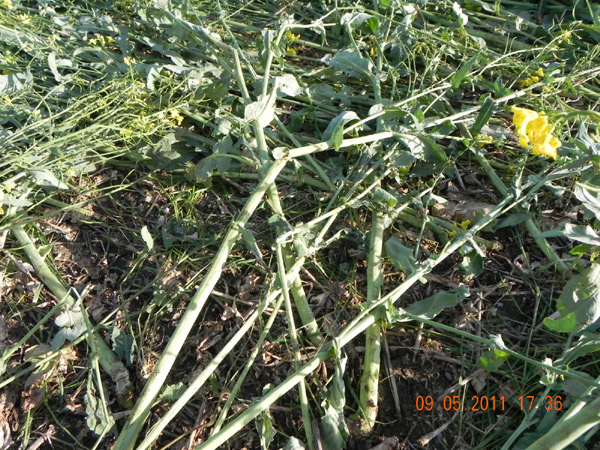
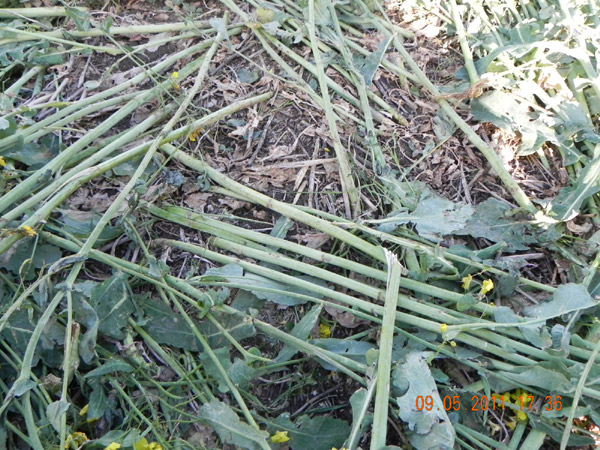
On reaching the field, the depressions can be seen from the footpath, I made my way to the far end of the field and cut back into the tramlines until I reached the edge of the formation. The floor lay was un-striking. On closer inspection, nearly every plant stem I examined had been broken clean off at the base, right above the ground. Others were broken anywhere between ground level and 6 inches above the ground. Others were part split along the stem, obvious pressure being applied along the stem with some weight. Everything indicating that foot power had been used. Quite interesting to me is the width of the rings in the outer circles......... probably about the max width that can be had with a stomping board?
 
Other tell tales signs are the scrap marks up the plant where the soft outer wall of the plant had been bruised. Also, and here is the reminder for all of you who wish to maintain that this is a genuine formation....PLEASE PLEASE, look back at the original findings of Mr Andrews and Mr Delgado....... in genuine circles, the plant stems are BENT NOT BROKEN, 2-3 inches above the ground and the plants are manipulated into position by some other force which places the plant and stem neatly ABOVE the ground.
 
Every plant in this formation is broken at ground level, OR if not broken, the whole stem is knocked over at the root, and then layed absolutely flat to the ground. Other indications of this being man made are the flattened rings of crops around the standing edges.........clear evidence of parts of the formation going down before others parts to create defined edges. Certainly this formation did not go to the ground in one swoop of some E.T. forcefield.
 
This location is extremely remote. An ideal location to make a formation without fear of being disturbed. The road I followed is the only one in or out. There are no overlooking vantage points to get an aerial view of the formation. If it was not for the keen eye of a member of the public, I don't think this formation would have been spotted. Which begs the question as to why anyone would bother to go to the length of walking out into the middle of nowhere to make this formation? totally off radar.

Paul Anderson


Images Paul Anderson Copyright 2011


BACK

  
Mark Fussell & Stuart Dike