|
Wilshire Hill Barn Crop Circle 2010
This
simple crop circle shows a circle surrounded by five other
circles arranged somewhat like a pentagram.

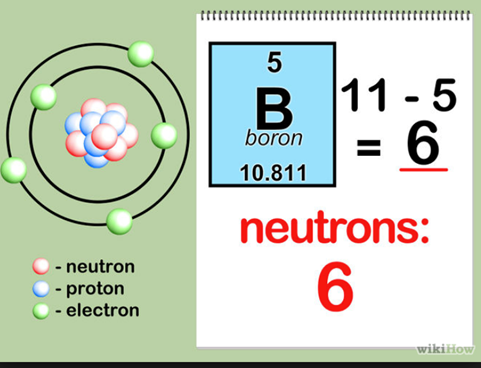
It strongly resembles
boron whose atomic number is 5.

Why
would crop circle makers want to alert us to boron?
Actually, boron is more than interesting. It comes entirely
from outer space and is produced by cosmic ray “spallation,” or
nucleosynthesis, a form of naturally occurring nuclear fission.[1]
Further,
it is very difficult to get in its pure form. It wasn’t until
1909 that it was isolated in this elemental form.
Boron is
present in the oldest rocks on earth, and may be a key to the
evolution of life. It has surprising characteristics. Without
boron plants don’t grow.
It is
also essential for the nuclear industry. Boron rods are used to
control the fission rate.
Recent research on boron “buckyball” structures have piqued the
interest of nanotechnology[2]
Professor Lai-Shang Wang, a chemist at Brown University who
discovered the first boron buckyball says “If you look at the
main group elements, there is no better place to start than
boron,"
[3]
The high pressure behavior of boron is also intriguing
scientists who work with ceramics. As one text underscores, “it
is arguably the most complex element in the periodic table.”[4]
Boron is showing great promise in cancer therapy too with “boron
neutron capture therapy.”[5]
“A series of recent scientific and commercial developments
indicate that boron-based compounds are interesting drug
candidates against all disease categories and might even speed
up drug development. Pharmaceutical companies have already
increased their boron research, particularly . . . Anacor. . .
founded in 2002 to develop boron-based antibacterial drugs, but
has since expanded into antivirals and other targets with its
boron-based platform.”
[6]
But
probably most curious and most relevant to the extraterrestrial
hypothesis is that boron may be related to humanity’s struggle
for fusion engineering. “John J. Chapman, a physicist and
electronics engineer at NASA’s Langley Research Center in VA,
aneutronic fusion could improve space
propulsion significantly. The new propulsion method is based on
boron fuel rather than deuterium and tritium, the typical fuel
for nuclear fusion.” [7]
So, why
do our circle makes drop a tiny crop circle down which looks
like boron? Perhaps they want to tell us it has enormous
potential for the future advancement of our species.
Jerry
Kroth, Ph.D. is an Associate Professor Emeritus from Santa Clara
University and may be reached through his website
collectivepsych.com
[4]
Nina Orlovskaya, Boron Rich Solids, Springer, 2010, p. 208
[5]
Narayan Hosmane, Boron Science: New technologies and
applications, CRC Press, 2016
|