|
This looked
amazing from aerial shots so I arrived full of expectation. This is
a vast formation, with a wonderful energy to it. While aerial
photographs tend to show the geometrical and aesthetic qualities we
can sometimes simplify it all and assume that it’s easy to create a
circle and then add another, then another etc. However, what isn’t
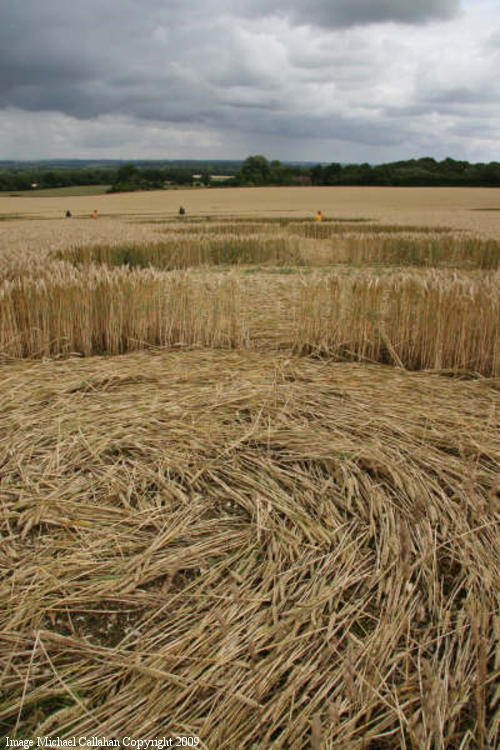
clear from the air is the undulating gradient of the field. This
field is quite undulating and not only that, but it has quite a
‘dip’, in it. For it to appear so perfect from above surely some
compensation has to be made in terms of its’ measurements when it is
created by the ‘circle makers’, whoever or whatever they may be?
Perhaps someone in the areas of surveying would be able to add more
on this. There have been countless formations in very undulating
fields but still they appear perfect from the air. Maybe the ‘circle
makers’ under compensated here? Maybe not?
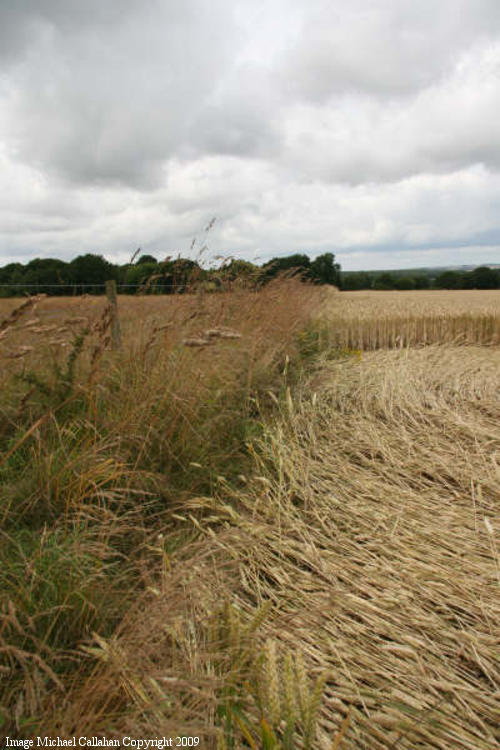
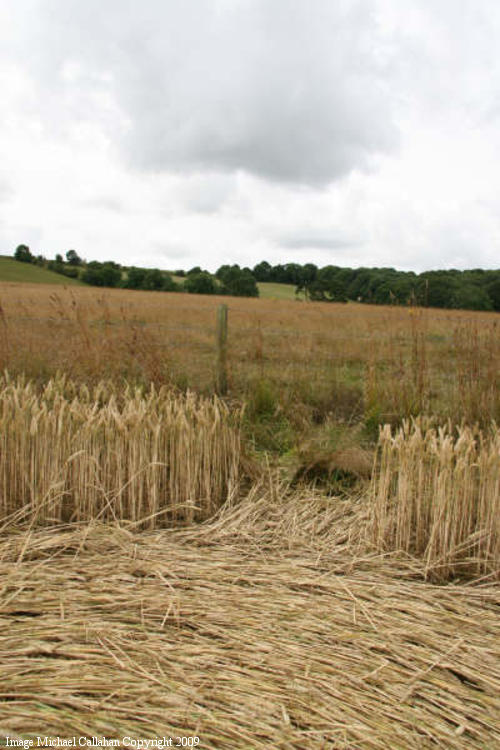
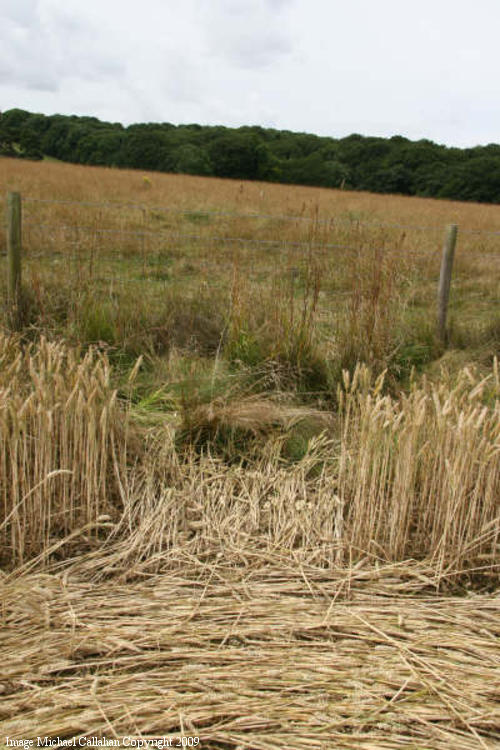
The first feature
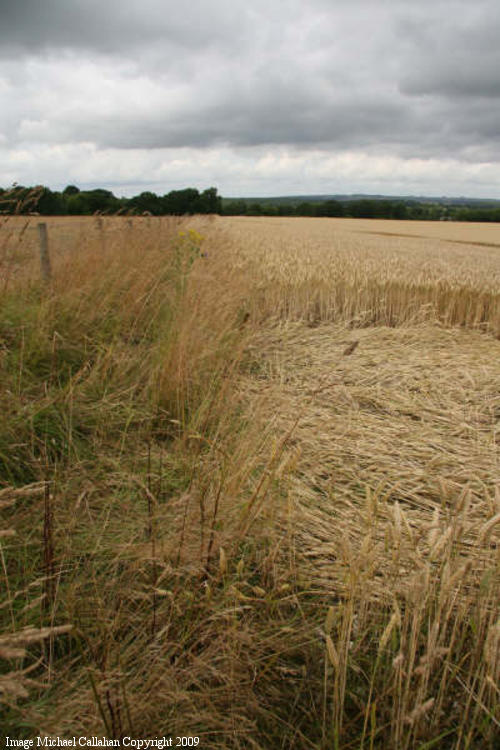
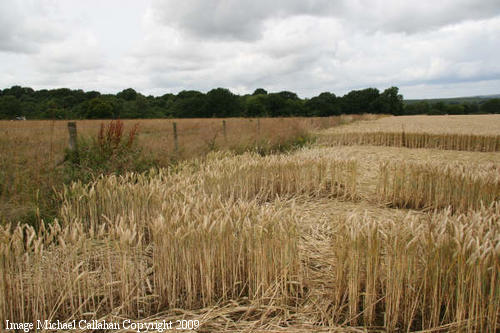
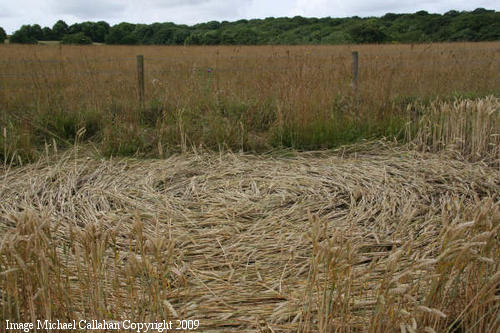
I wanted to check out was where the formation went to the end of the
field and stopped. As can be seen from the aerial photographs, this
occurs twice. I checked very carefully where it stopped. It stops
just before a barbed wire fence. The grass growing there is totally
unaffected as is the grass the other side of the fence. I couldn’t
find anything to suggest that an ‘energy’ of some kind had continued
past the formation. Maybe dowsing would reveal more?
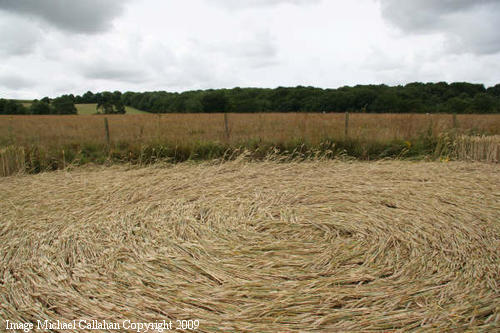
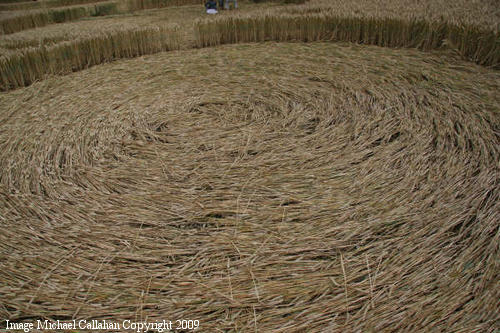
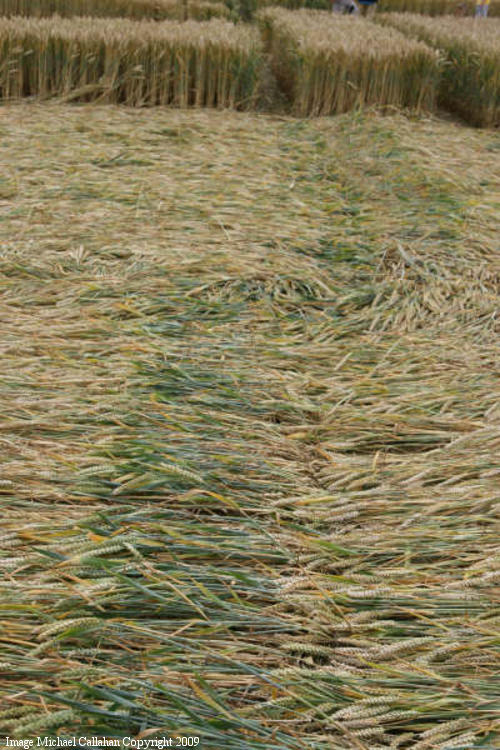
Although, I
visited this formation fairly soon it has had quite a few visitors
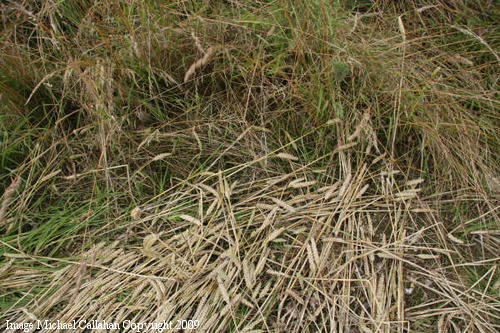
and there was lots of breakage. It is also worth taking into account
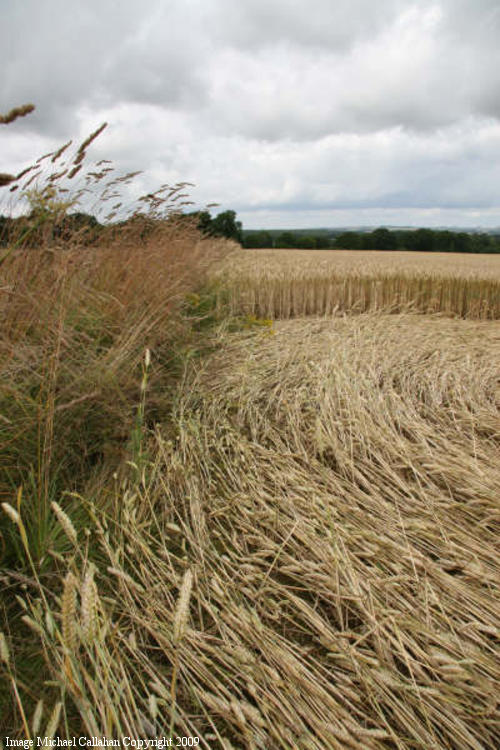
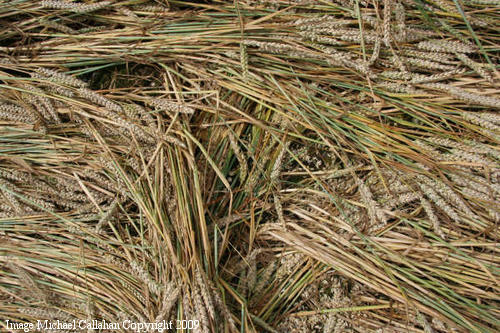
that it has rained a lot since it appeared. The crop was very flat
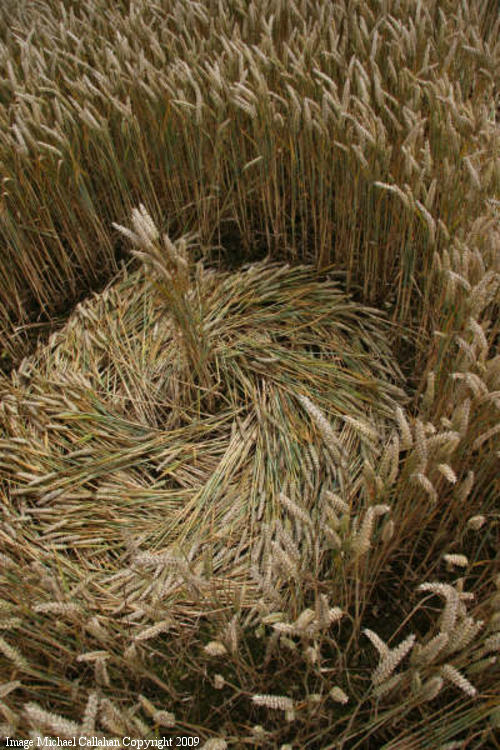
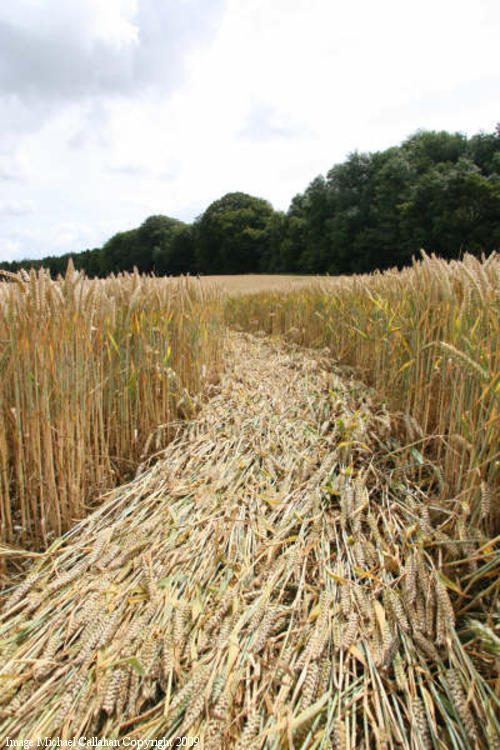
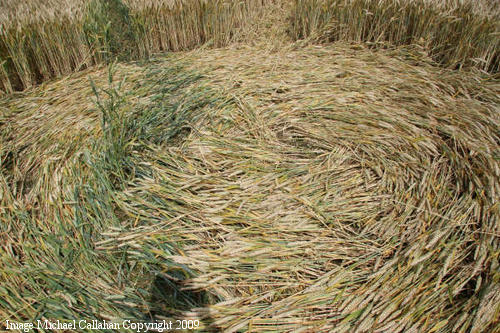
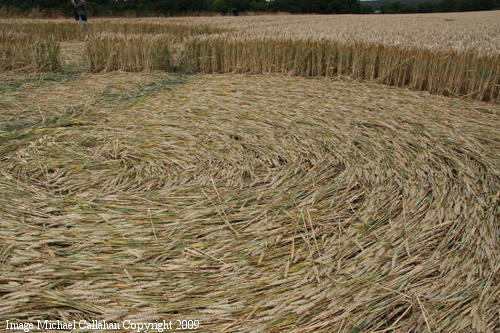
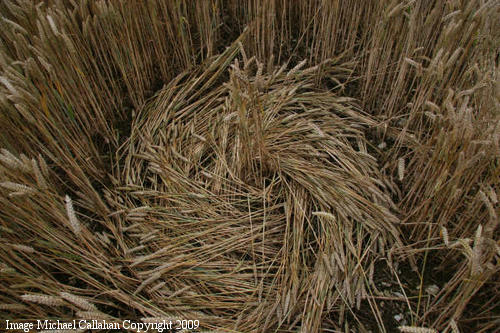
throughout the formation and the lay was always in a clockwise
direction. The circles were perfectly formed and the ‘energy’ seemed
very fast flowing. The lay was very neat. The circles felt and
looked stunning!
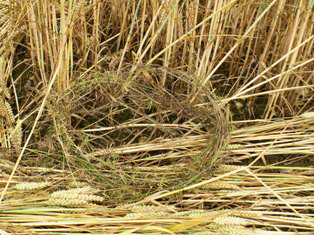
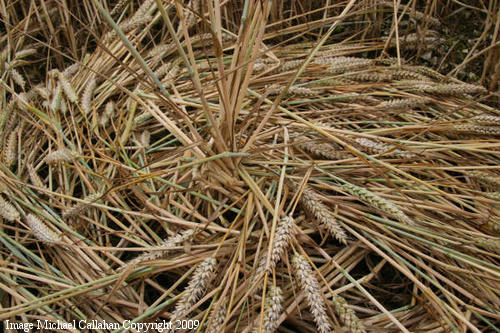
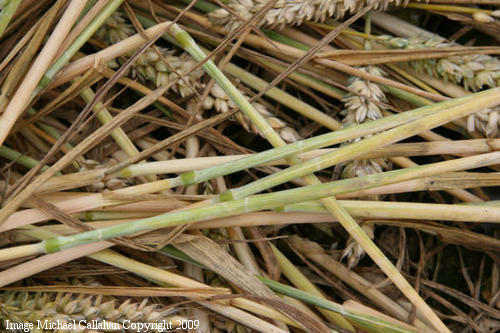
In terms of nodal
anomalies, personally I couldn’t find any but I did speak to others
who said they had found elongated nodes. No expulsion cavities could
be found. I found the white ‘chip marks’ often in parallel to each
other.
From the air,
there are places where the tram lines appear wobbly. This is caused
due to the clockwise direction of the lay in the circles. The crop
was greener along this area and one side of the circle the crop went
one way and the other side it went the opposite, creating the
‘wobbly’ effect.
This formation
felt awesome. Geometrically, it is ‘out of this world’. Can you
imagine drawing it on paper? That in itself would be a major
achievement but to create it in a field (an undulating one at that!)
is something else. If there was a Museum of Modern Art for crop
formations then surely this would be in it!
© Mike Callahan
www.wiltshiretours.com
|