|
Click on Thumbnails to enlarge
Images Mike Callahan Copyright 2009
As I was able to
go into this formation quite early I carried out a very satisfactory
field report. It is only just noticeable from the road and it was
more luck than judgement that I found it without wasting too much
time. I have spent many hours playing ‘hide and seek’ with the
circles.
This was an
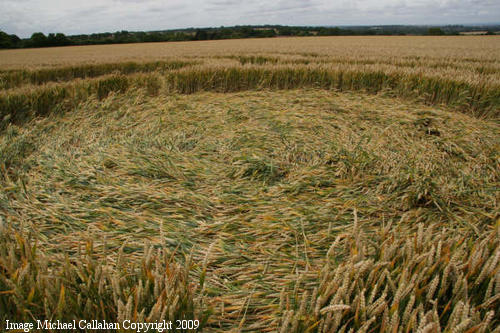
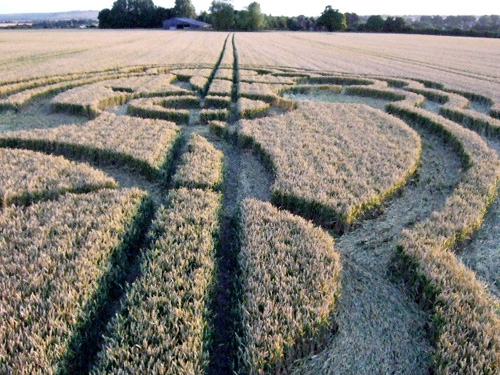
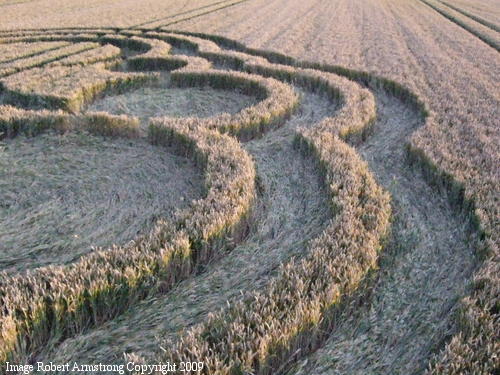
enjoyable formation to visit and there were a few features that
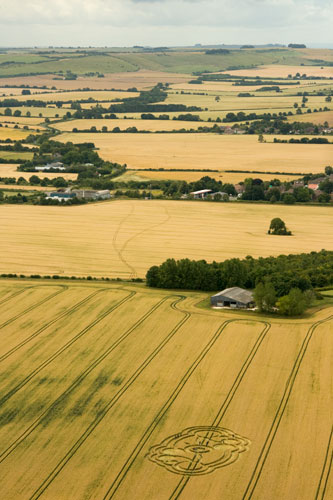
interested me. To begin with it was much smaller than most of the
ones we have seen this year. It lacked the vastness of the one at
Wootton Rivers, but size isn’t everything. On entering the formation
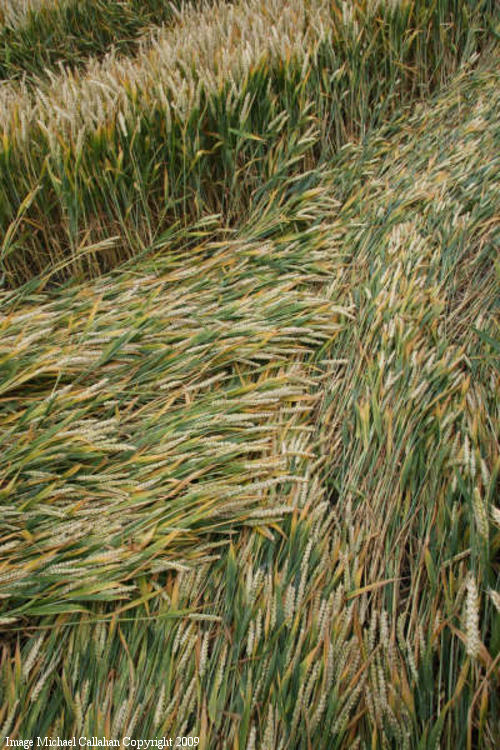
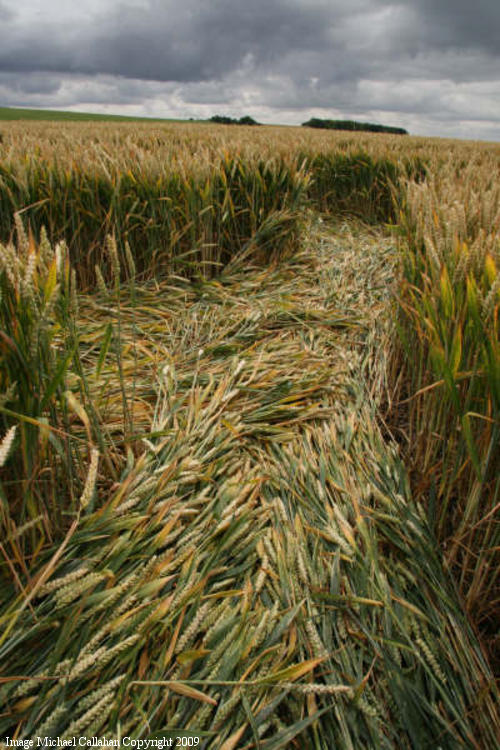
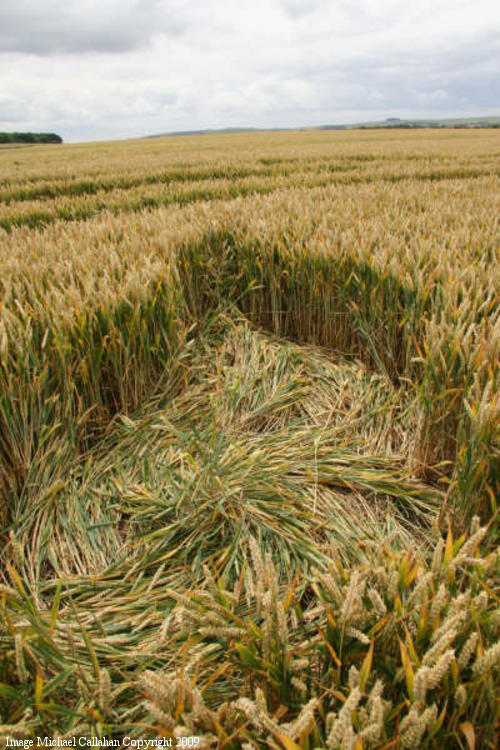
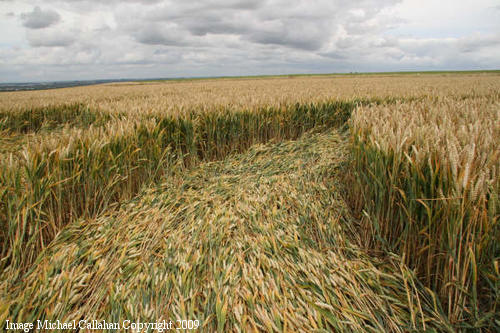
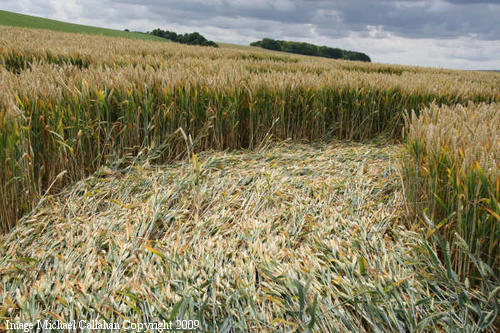
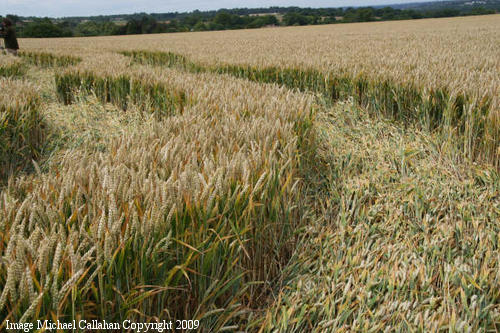
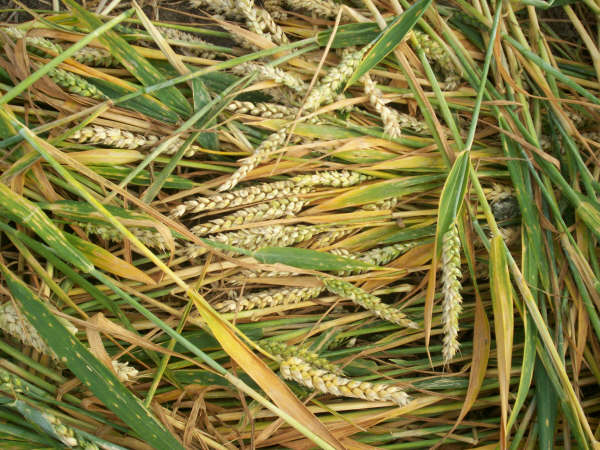
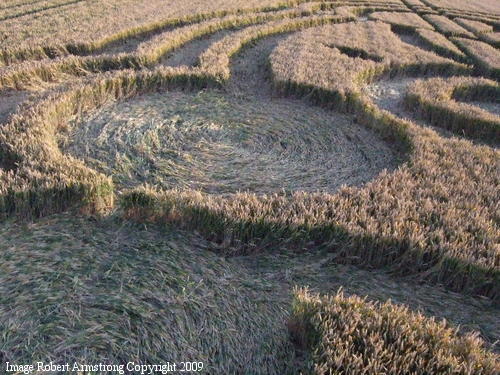
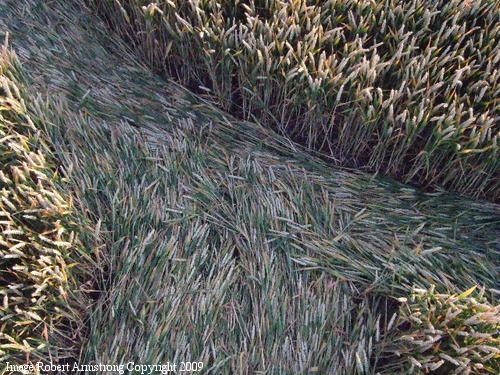
I noticed that the lay went anti-clockwise. It went in this
direction for the first two paths around it. It was crunchy
underfoot and not flat. Certainly, nothing like the flatness at
Wootton Rivers. Generally the lay seemed neat and there was more
than the odd standing stem.
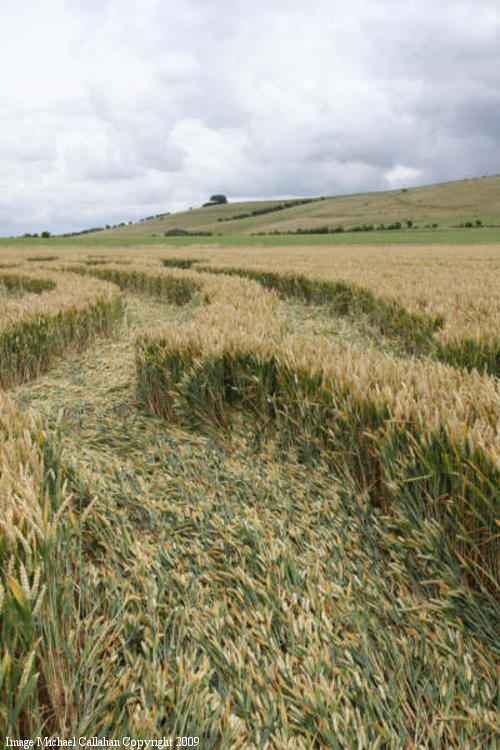
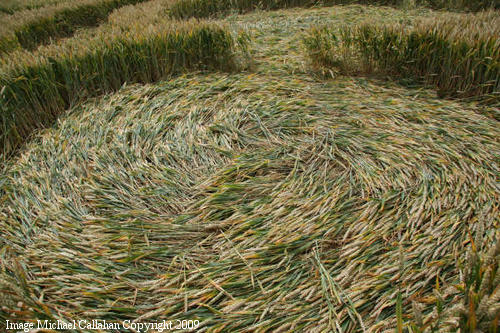
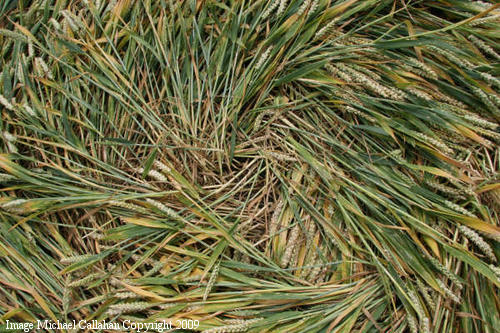
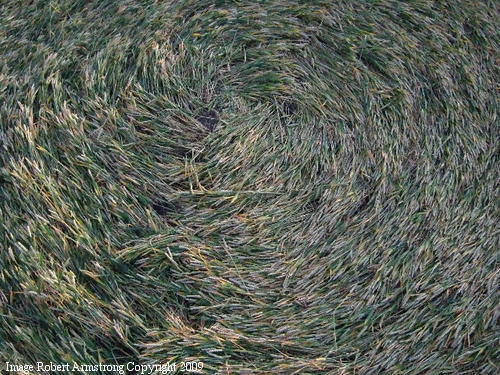
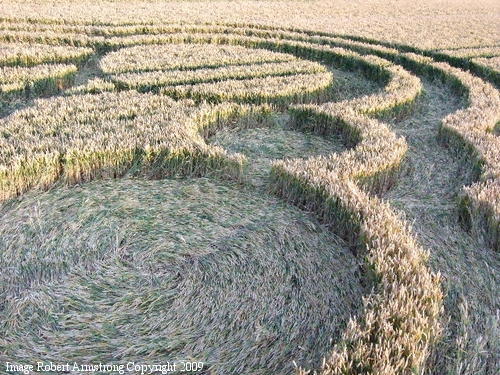
As I went deeper
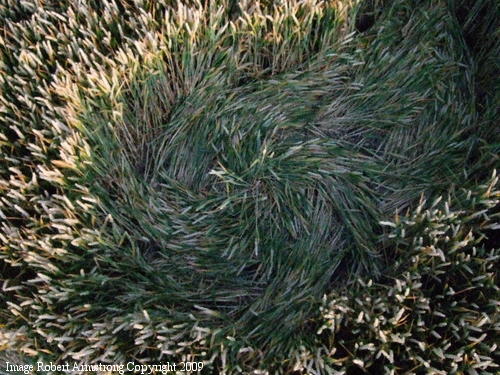
into the formation, the lay went clockwise. I found the spiral
features fascinating and again there was a clockwise lay in these.
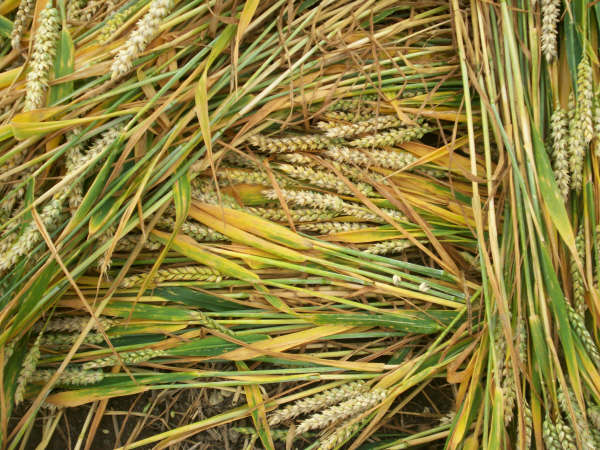
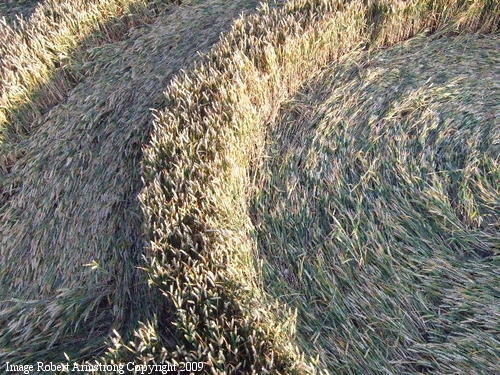
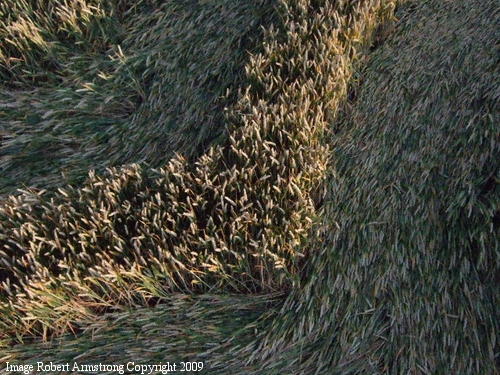
Getting down at ground level there was a lovely sweeping and
energising flow throughout with nice curves! However, at corners,
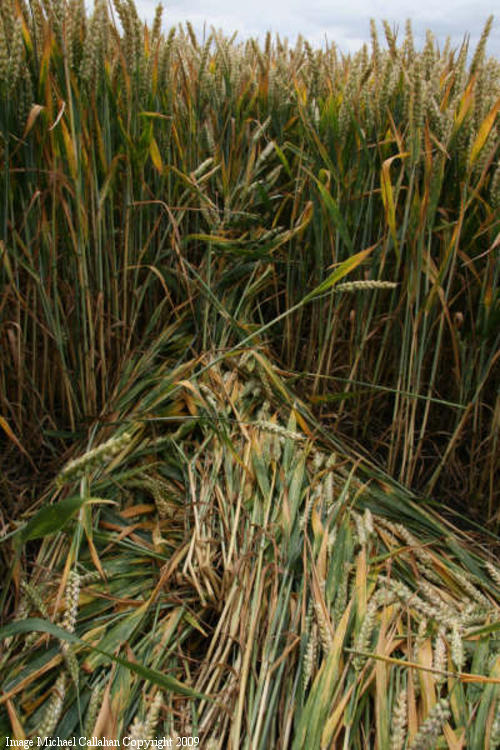
rather than flow around, the wheat often seem pushed up against the
standing crop, sometimes layered.
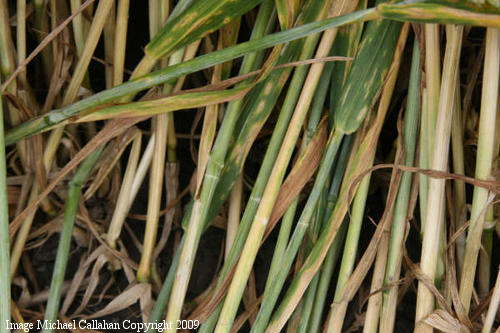
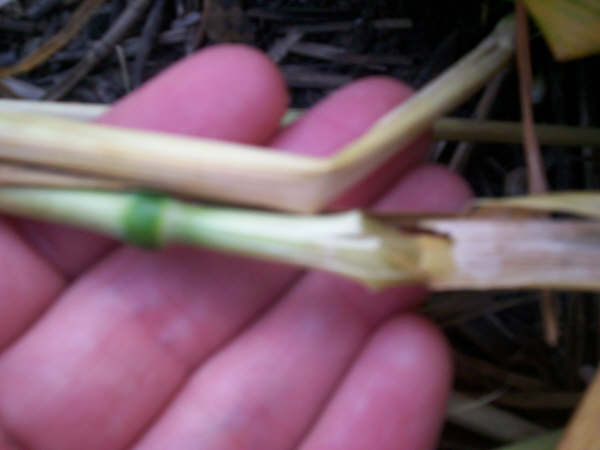
Looking closely at
the crop, there was a lot of breakage considering it had relatively
few visitors. I checked for nodal elongations and bending but could
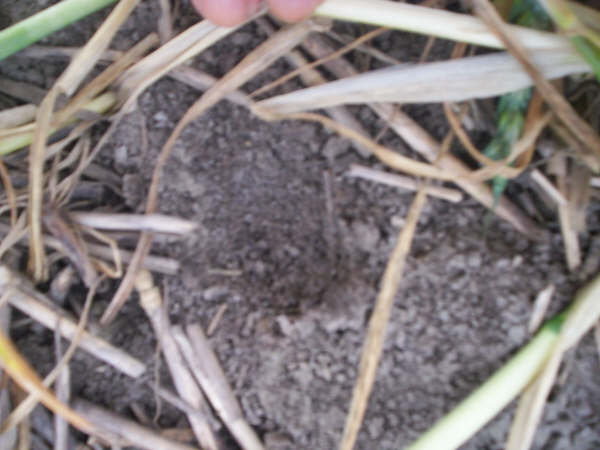
find no evidence of this. Neither could I see any expulsion
cavities. There were some blackened nodes, but I believe these to be
fungus and not to be confused with expulsion cavities. Also, I found
the white ‘chip marks’.
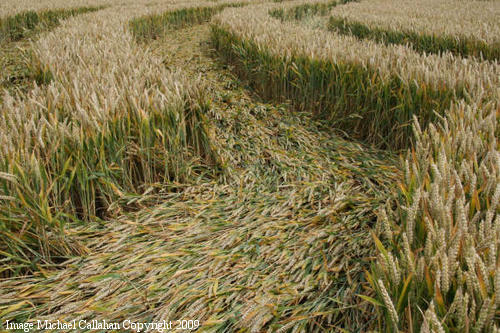
What was
interesting was what was found on closer examination of the lay. As
I said, it tended to flow clockwise as I went into the centre area
more. In patches, there were small areas where the wheat went the
other way. It wasn’t across the whole of the width of the lay, but
about 20-25 stems thick. Basically, the lay was 1.5metres width but
in the middle of the path abut 20-25 stems would flow the other way
for a short distance. This would peter out after a metre or two. It
was in more than one place. I have seen this before but not too
recently. This can be seen in the photograph with the blue pencil.
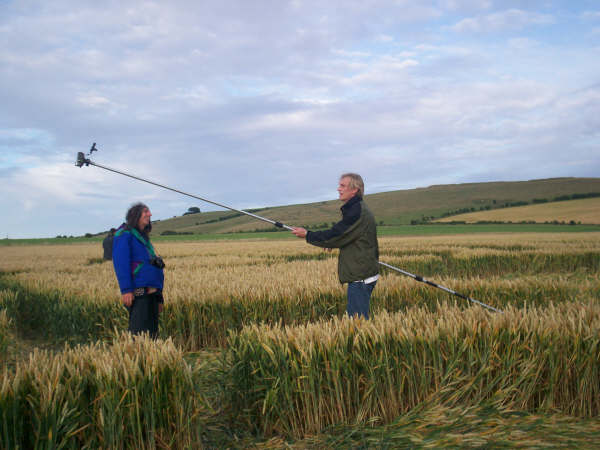
The other
interesting information was I talked to a friendly couple with a
magnetometer. He said that there a higher reading than some recent
formations but there was little difference in the readings outside
and inside the formation.
An enjoyable visit
to another fascinating formation with a good ‘energy’ to it.
© Mike Callahan
www.wiltshiretours.com |