|
UPDATE
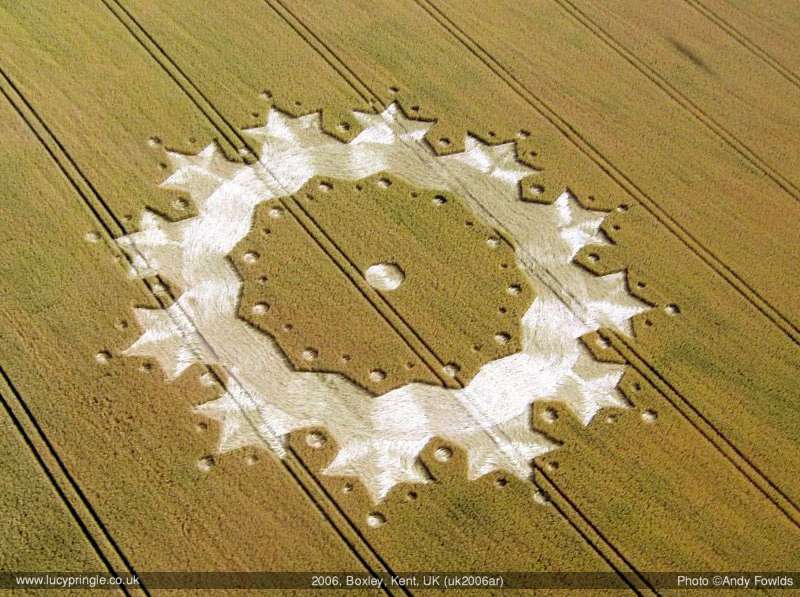
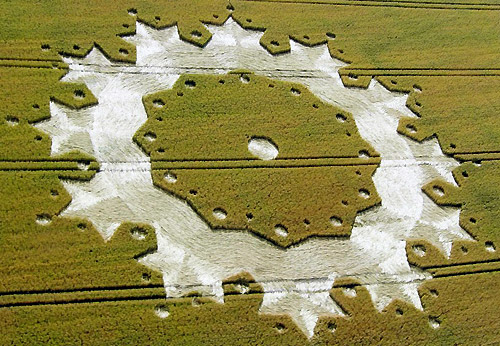
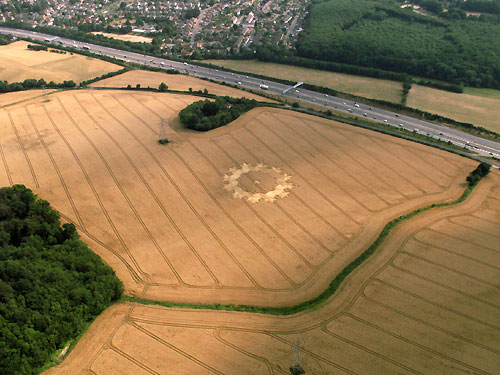
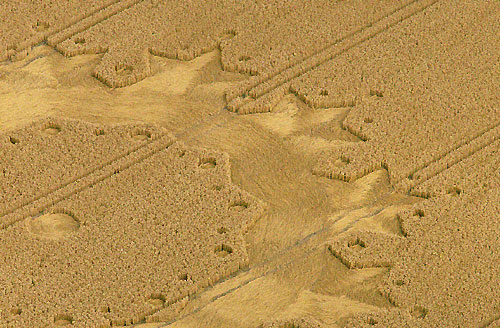
This spectacular fractalised snowflake
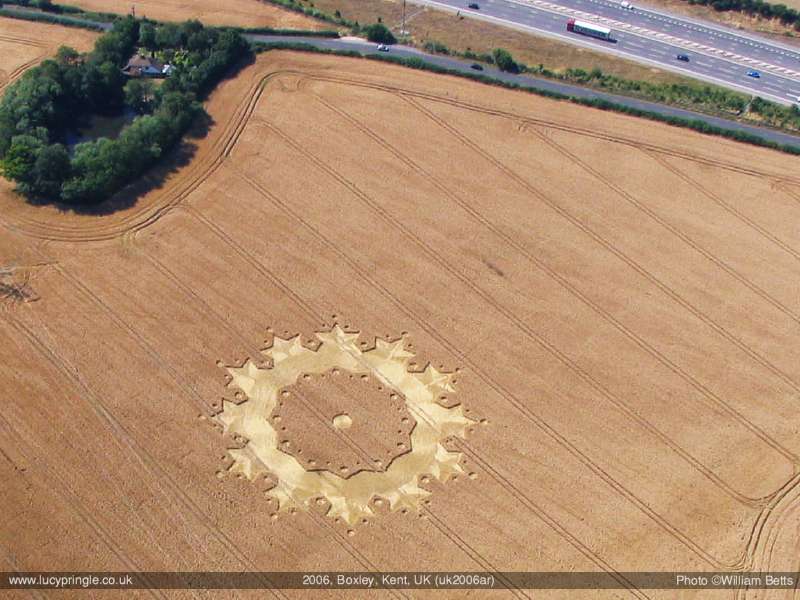
that's spread over four tramlines, rests on a gentle slope in the same
field that hosted last year's Boxley event. This is a very large field
and you'd be forgiven for thinking it was two or three fields. The
deception is due to the long woodland divides, plus the wild bank of
the brook that runs just below the formation, that flows from the
springs at nearby Boarley.
This formation is a million miles away
from any "circle faking" efforts ... its floor lay is a free-flowing
reminder of just why my interest in this amazing phenomena never
wanes. What confronts you is a liquid sweep of crop flowing throughout
its entirety, that looks as if it's rushed around in an attempt to
fill every nook and cranny. It's as if the tide came in...just look at
William Betts photo below!
(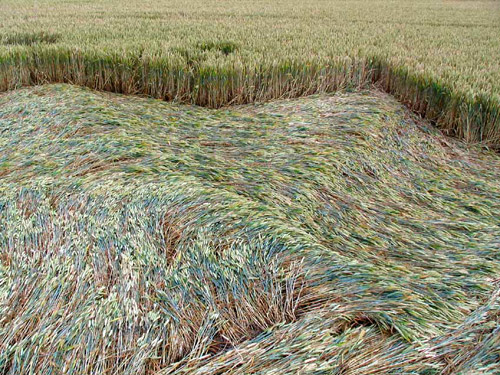
Image William Betts Copyright 2006
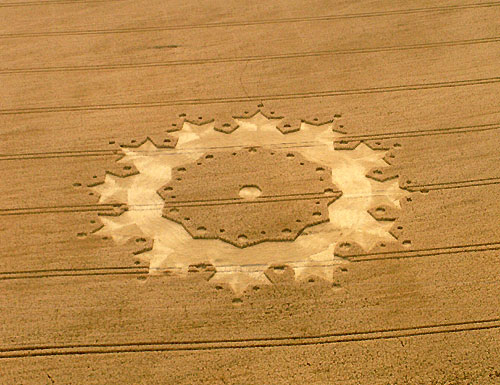
Whilst the small circles lacked standing
centres, they splayed out so well that they didn't
disappoint. Interestingly, a few fanned-out right across the path of
the tramlines.
Once again "The Circlemakers" have laid
the numbers 3 & 6 etc at our feet. And this time with this design, the
geometers are certain to have their very own "field" day! The
formation doesn't appear to align with anything at present, but as we
know from past experience, maybe that's all to come.
The formation faces the fragmentary
remains of Boxley's Cistercian Abbey, which are now to be found within
the grounds of an 18th century private house. Founded in 1146 the
Cistercian Monastic Order is important historically for the cult
worship of the Virgin Mary. The wealth of the abbey was considerable
at one time and much of it was lavished on the church within the abbey
that was naturally dedicated to Mary. It was said to surpass all
others in magnificence. The boundary walls of the abbey precincts are
strewn with ivy and broken in places but are still complete and
enclose some fifteen acres. A ragstone barn circa 1280 still stands
perfectly preserved within this area which at one time it's believed,
was where pilgrims stayed before setting out once again for the nearby
Pilgrims Way to Canterbury.
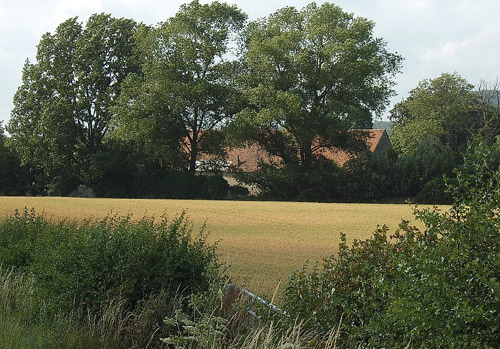 Image Graham Tucker copyright 2006
Graham Tucker
|