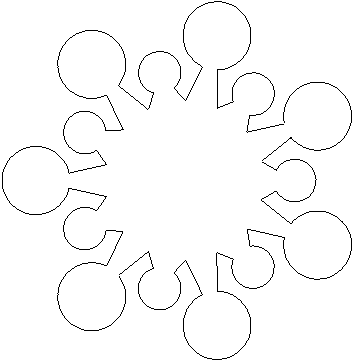
Reconstruction of the 1999 Roundway formation
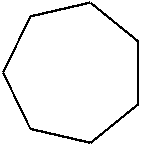
- Create a heptagon, a regular 7-sided polygon.
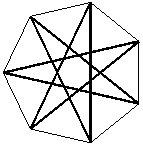
- A heptagon has 2 sets of diagonals, one set drawn from each corner to every second corner and one set to every third corner. Draw the "3d corner" diagonals. These form the basic heptagram, a 7-pointed star, the larger one of the Roundway formation.
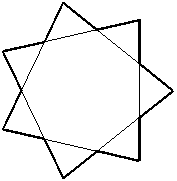
- Extend the sides of the basic heptagon until they cross. This will create a heptagram of greater size. The crosspoints define the corners of the next "higher-order" heptagon.
- Repeat this two more times.
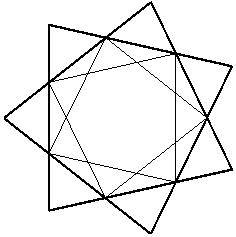
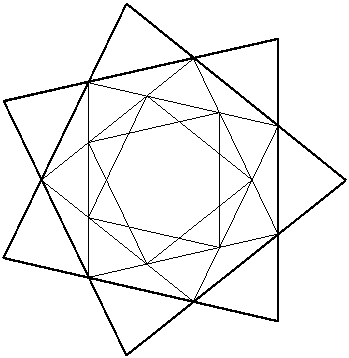
- From the last heptagram, draw the "3d corner" diagonals.
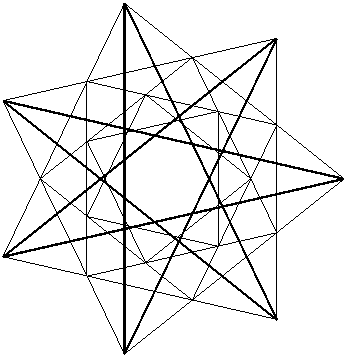
- These diagonals enclose a smaller heptagon.
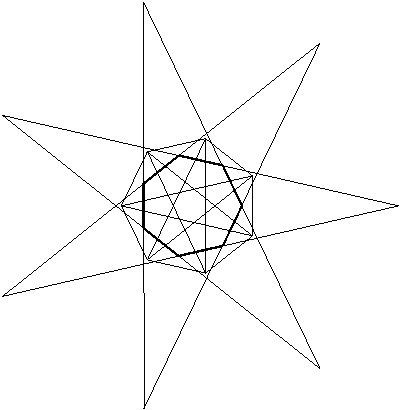
- This heptagon forms the basis for the smaller heptagram of the Roundway formation.
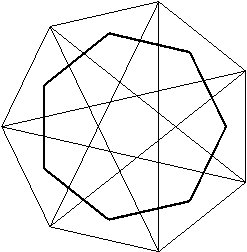
- From the corners of the smaller heptagon, draw lines to opposite corners of the larger heptagon.
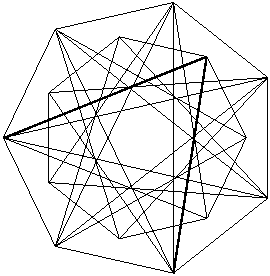
- Now, the basic shape of the smaller heptagram is ready.
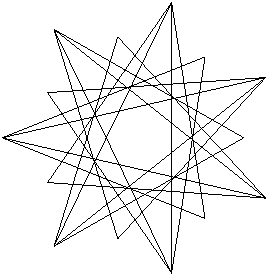
- The circles for the two sets of circles at the corners of both stars are derived from smaller, lower-order heptagons. To construct these, draw the "2nd corner" diagonals from the basic heptagram.
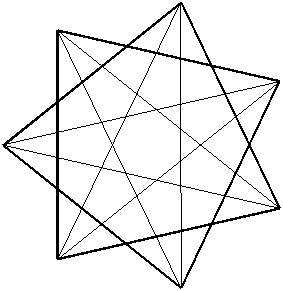
- Repeat this one time…
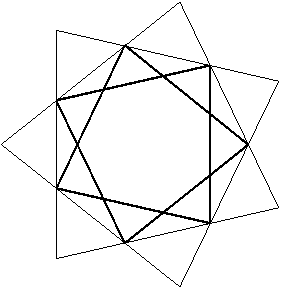
- …and another time…
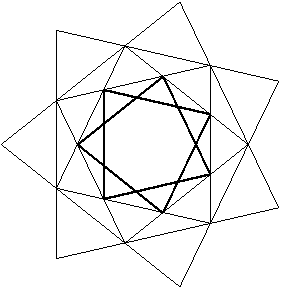
- …and a third time. From the heptagon derived, the outer circle will be used as the greater one for the pointed star.
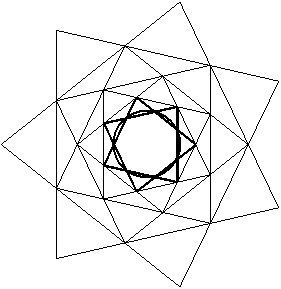
- One more step will yield the smaller circle, the inner circle of the next lower-order heptagon.
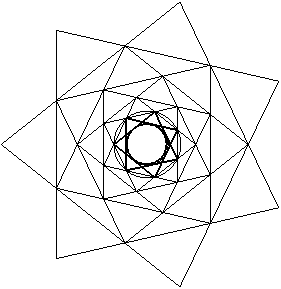
- Now, all the ingredients have been derived.
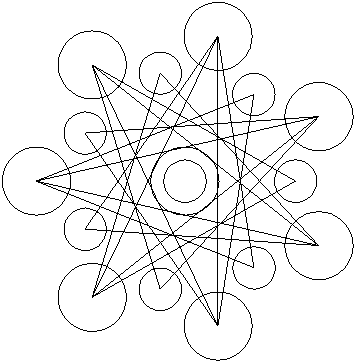
- Removal of all superfluous lines will result in the reconstruction of the 1999 Roundway formation.
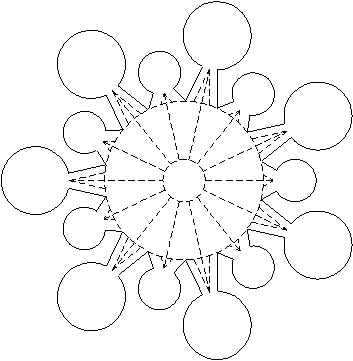
- The floor lay-out shows a beautiful pattern, arranged along the dashed lines, as shown here.
© February 15, 2000 Zef Damen, Leidschendam, The Netherlands