|
© 1998 Steve Alexander Homepage
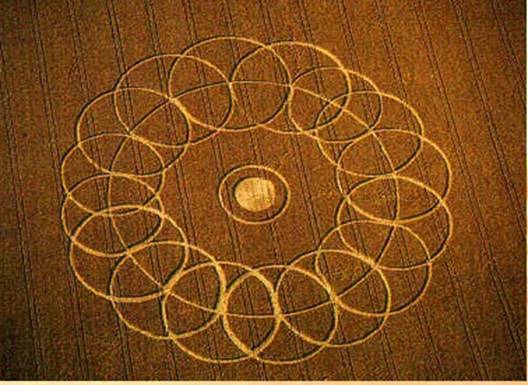
This 350 foot formation in barley (or rye) consists of a ring of rings is especially notable for the extraordinary collection of grapeshot in the field with it. It appeared in mid-July. Not only are there an usually large number of grapeshot, (44 as of July 25th aerial survey), but on close inspection in the field, many of them had astonishing large, dense, sculptured tufts in their centres. One had a thick rope of twisted stalks that went 'round' and 'round' the centre before turning back in the other direction and curving out to the perimeter. Several of the circles are isolated between the tramlines. Report by Peter. R. Sorensen. The Goodworth-Claford circle, July, 1995 Certainly before we look at crop circles we need to remind ourselves of some early pitfalls: (1) Are we looking at man-made pictographs and hoaxes, or are these extraterrestrial communications? (2) Are we as fully conscious as we need to be that as human beings we have a tendency to project our own stuff into any ambiguous stimulus (like a Rorschach blot) and see our own needs and desires before what is objectively presented out in front of us?
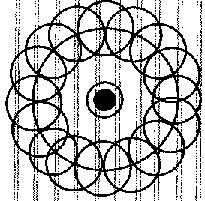
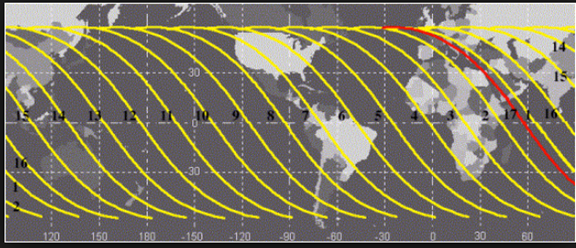
Both of these tasks are certainly not very elementary or easy. Sure it would be nice to know if our crop circles are authentic and there are ways of knowing if they are man-made; if there is an infrared signature, if there are no footprints, if insects are frozen in place, if the crop stems are bent rather than broken, if radiation or soil minerals have been altered, and if there are no shreds of wood or splinters, then there is some higher probability these may indeed be extraterrestrial in origin. But the crop circle community is not that well endowed to be able to provide exhaustive field reports like this for every circle. This one in 1995 has no field reports at all. So let us make the assumption that it is extraterrestrial in origin. How would we go about interpreting the message? The very pretty Goodworth-Claford circle appeared South of Andover in England in 1995. It shows 16 circles around a circular object. Should we think of 16 “revolutions” per minute, or is it per hour, or per day, or per year? Nothing comes up until we stop and think about 16 revolutions per day. Here we have a major insight. There are many satellites that orbit the earth 16 times a day. It is an important marker. If the circle is referring to that, then that makes the center circle in this pictograph the Earth, and the 16 other circles orbits that occur over the course of a day. So what exactly do we know about satellites that orbit the earth 16 times a day? A satellite that makes that many revolutions per day covers the whole planet in a twenty-four hour period as you can see from the NASA figure that follows:
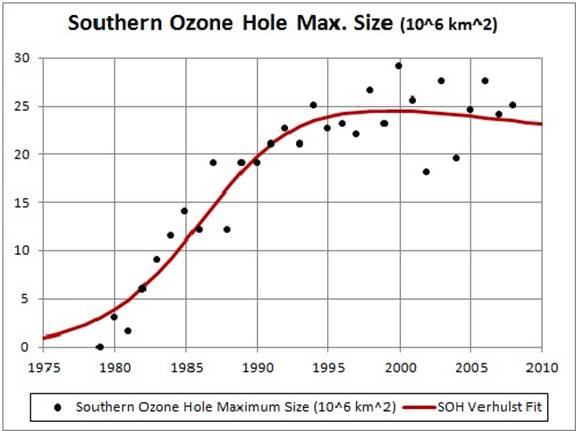
Typically satellites which fly at this tempo do so in what is called Low Earth Orbit (LEO) at an altitude of about 160 km and take roughly 90 minutes to complete a revolution. There are other types of orbits too, Medium Earth orbits (ME)), Geosynchronous orbits, (GEO) or High Earth orbits (HEO). But Low Earth Orbit Satellites are all the rage and are “reshaping the global communication network:” This is the favorite haunt of communication satellites: Gobalstar, Iridium, Orbocomm and Teledesic, Telster, Itelstat, Hot Bird, COMSAT and other communications giants; all are up there dancing at 16 revolutions per day. [1] [2] [3] The International Space Station follows the same rhythm. So do meteorological satellites. In fact, the majority of satellites in space, about 500 which are now operational, are operating in this LEO orbit. One of the problems of the Low Earth Orbit satellites, therefore, is the level of space debris they generate. It is a highly traveled highway and there is a lot of junk accumulated; at least 8,500 objects larger than 10 cm have been floating around in this region and pose a huge hazard to satellite systems. And they are moving fast too, about 8,000 meters per second. [4] [5] What’s it all about Alfie? So what are our extraterrestrial friends attempting to say? If they are portraying low earth orbit satellites revolving around the earth 16 times a day in this pictograph, why? What is their intent? Let us start with the one object we haven’t talked about in that crop circle, and that is the circle that appears around the center circle. If the center circle is the Earth, then what is this circle that surrounds the planet and which occurs before we get farther out to the 16 orbits going round the Earth? Could it be the stratosphere? Or perhaps the ozone layer? What does the ozone layer or stratosphere have to do with orbiting satellites, or with LEO satellites, or with 16 revolutions per day? Well, actually quite a bit. A number of articles have appeared which show that solid propellants in rocket launches release material into the ozone layer and ozone depletion is strongly related to solid-rocket firings. [6] “Some 20 years ago, Zolensky led a team that found a ten-fold increase in the abundance of large solid particles in the stratosphere between 1976 and 1984. Using high-altitude aircraft, the NASA sampling program was directed at snagging particles of dust from comets and asteroids as they filter down through the atmosphere . . . However, when the collection plates were later analyzed, exhaust residue from solid rocket motor firings, protective paints that shed from the outer hulls of spacecraft in orbit, and particles of mostly aluminum from re-entering space hardware were identified.” [7] Another study reported that “every time the space shuttle is launched, 250 tons of hydrochloric acid is released into the air. . . So far the space shuttle has destroyed 10% of the ozone. [8] Russian rocket scientists concur. Other studies allege aluminum oxide is another by-product of these launches and similarly damages the ozone layer. Add into that equation an estimated that 70-80 metric tons of space debris released into the stratosphere.[9] “Indeed, as an object plows through the Earth’s stratosphere, a shock wave is created that produces nitric oxide, a known cause of ozone depletion. Spacecraft and rocket motors are composed of metal alloys and composite materials that melt away during re-entry. The researchers found that these materials, as they undergo intense heating, also form chemicals that react directly or indirectly to consume ozone.”[10] The journal Astropolitics has urged more attention given to rocket launches and pollution occurring in the stratosphere as well as ozone depletion. So, perhaps the conclusion of this exercise is that there may be an “intent” in this lovely crop circle. It seems to be saying that these low earth orbiting satellites humanity has launched, which rotate about the earth 16 revolutions per day, have been generating debris which is impacting the ozone layer and threatening the planet. Is a word to the wise is sufficient? That warning occurred in 1995, and it doesn’t appear that we have been listening. While humanity has tried to control substances like chlorofluorcarbons, halon, methyl-bromide and others through legislation, [11] the size of the ozone hole in Antarctica has barely budged. If we received a warning in 1995, it is clear from the graph below that we made very little progress since our extraterrestrial red flag alert. [12] The ozone layer protects all life on earth from ultraviolet radiation. When we deplete it, we deplete the prospects for all life on this planet. Perhaps our alien visitors have our best interests at heart. Jerry Kroth, Ph.D., is an Associate Professor Emeritus from Santa Clara University and may be contacted through his website collectivepsych.com [1] N/A |