CROP CIRCLES IN CANADA IN 2007

07 Formations

Updated Tuesday 30th October  2007


Quill lake, Saskatchewan - early September, 2007 Location
 (nearest town or landmark): Quill Lake, Saskatchewan

Date: early September, 2007
Description: two rings
Crop / Vegetation: wheat
Size: approximately 4.3 metres (14 feet) diameter and 4.3 x 5.2 metres (14 x 17 feet) diameter; 4.5 metres (15 feet) apart
Farmer: confidential
Investigation: John Erickson (CCCRN Saskatchewan)
Source / Credit: John Erickson (CCCRN Saskatchewan)

Notes:
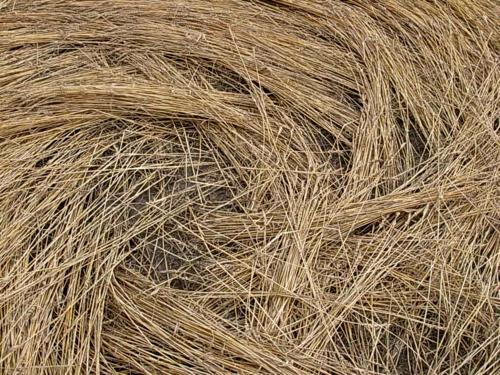
First found in early September but not reported until October 17. Clockwise lay in both rings. Green growth in one ring but not the other. No physical or magnetic anomalies, significant damage or tracks. In middle of field, which had already been combined by time of investigation. Possible other formations in area but not reported.


Londesborough, Ontario - October 1, 2007

Location (nearest town or landmark): Londesboro, Ontario
Date: October 1, 2007
Description: circle
Crop / Vegetation: corn
Size: approximately 4.6 metres (15 feet) diameter
Farmer: unknown
Investigation: Mervyn Erb (Erb Crop Management Systems Inc. / Agri-Solve Inc.)
Source / Credit: Mervyn Erb (Erb Crop Management Systems Inc. / Agri-Solve Inc.)

Notes:
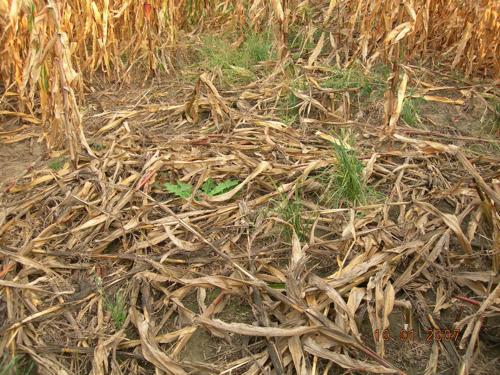
First found and reported by Mervyn Erb on October 1 (probably a few weeks old, like the formation at Shakespeare). Most stalks are bent, broken or snapped off a foot or more above the ground, with other stalks lying on the ground between them. Many stalks also modestly twisted. No evidence of burning, as from a lightning strike (blackened spots on stalks are fungus). Three dead racoons on edge of circle, all in same state of decay. No evidence of burning, as from a lightning strike. Field is a Pioneer corn seed variety plot.


Shakespeare, Ontario - mid-late August, 2007

Location (nearest town or landmark): Shakespeare, Ontario
Date: late August, 2007
Description: oval and half-circle
Crop / Vegetation: corn
Size: approximately 7.3 x 14.7 metres (24 x 48 feet) diameter and 3.6 x 4.5 metres (12 x 15 feet) diameter; 18 metres (60 feet) apart
Farmer: confidential
Investigation: Joanna Emery (CCCRN Ontario), Mervyn Erb (Erb Crop Management Systems Inc. / Agri-Solve Inc.)
Source / Credit: Mervyn Erb (Erb Crop Management Systems Inc. / Agri-Solve Inc.)

Notes:

First found by farmer sometime in late August; later found and first reported by Mervyn Erb on October 1. Random lay in larger oval, counter-clockwise lay in smaller half-circle. Most stalks are bent, broken or snapped off a foot or more above the ground, with other stalks lying on the ground between them. Ruptured or split nodes on upper portions of some stalks, including still-standing ones. Many stalks also modestly twisted. No evidence of burning, as from a lightning strike (blackened spots on stalks are fungus). Near edge of field, but cannot be seen from the road. Farmer reported hearing coyotes barking and howling the night it may have occurred (unusual for the area). Field is a Pride corn seed variety plot.

Personal Report on the Shakespeare, Ontario Canada Formation:

hakespeare is a small town slightly east of the more famous home of the Stratford Festival in Stratford, Ontario (where William Shakespeare's plays are put on all summer long and have become quite the tourist attraction).  The report of a formation was relayed to me by a crop advisor (M.Erb) from the Southern Ontario area who has been involved with CCCRN in previous years.  I went to check it out on Thursday, Oct.4 with a friend ('Stu') and easily found it thanks to Merv's directions.  It cannot be seen from the road but is only about 60 ft from the road and 40 ft inside the corn field.  The formation is rather 'messy' and the 'edges' are not perfect but it does have an oval shape to it.  The size is about 48ft long (east/west) by 24 ft wide (north/south).  There is no definite lay but I did notice that the most (not all) of the stalks were bent/broken on the north (left) side of the circle went to the left, and those on the opposite side (south), went to the south.  I noticed a few, but not many 'split' nodes at either the first or second node from the top of the plant.    The bent stalks and broken stalks, which seemed 'charred' (maybe fungus ?) where they snapped or were broken usually happened at the second or third nodes from the bottom.  Many stalks also had a slight 'twist' to the stalks. About 60ft from this formation is what I might call a 'grapeshot' approximately 12 feet in diameter of downed crop.  Although it is not circular (more 1/2 circle) I  noticed it almost looked like it 'tried' as the inner downed stalks had a definite counter clockwise lay.  Snapped/broken/bent stalks were also seen in this formation.  Both formations did not seem to have roots pulled up or bent (as in previous corn formations).  The farmer's wife discovered the larger formation about 6 weeks ago but did not recall anything else.  Interestingly, she later remembered that she heard coyotes howling one night around that time as it was very unusual to hear them in her area.  On a personal note, my family and I drove through Shakespeare on Sept.30 to pick up our new pet St. Bernard puppy.  I have only been through that area a couple of times in the past several years so it is not somewhere I often go.  As often happens when I travel near large country fields, I remember thinking, in my car, something along the lines of 'what if there is a crop circle around here'!  Coincidence?  Maybe, who really knows? 

Unfortunately, due to time and ‘puppy’ constraints, I was not able to check out the Londesboro formation after viewing the Shakespeare one. Londesborough is located further west and would have involved quite a longer drive although the ‘dead raccoons’ report of that formation would have been interesting to see.  I must add though that the Shakespeare formation, while not the ‘prettiest’ corn circle I’ve seen, was intriguing.  It was located in a ‘demo seed plot’…does that fact perhaps have anything to do with it?  It cannot be seen at all from the road and I wonder why anyone would go to the trouble of making such a formation.  There is another interesting point I’ve noted about the last two Ontario formations that we’ve had (and that I have checked out).  Last year’s Ontario crop circle was reported north of Toronto in Schomberg on ‘Puck’s Farm’.  Many think it may be hoaxed because it did look rather wobbly from the air but, so far, no one has claimed responsibility and there was no ‘repeat’ this year.  On the other hand, we had the Shakespeare formation this year, another ‘imperfect’ one, and I can’t help to connect the two locations.  ‘Puck’ is known to be a trickster nature spirit and also a character in (get this)…‘A Midsummer Night’s Dream by William Shakespeare

Then again, perhaps I’m grasping at those proverbial corn crop circle straws, I mean…stalks. J


Joanna Emery

Ontario contact for the Canadian Crop Circle Research Network


Abbotsford, British Columbia #2 - August 26, 2007

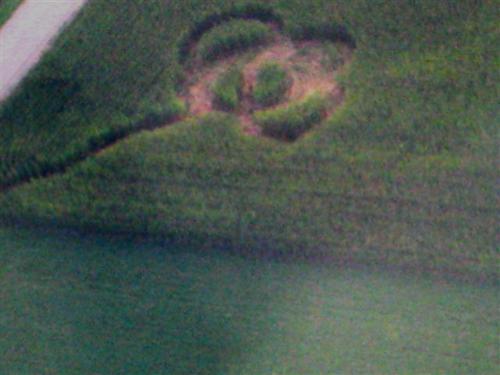
A second formation in the Abbotsford, British Columbia area found on August 26, not far from the first Greenpeace formation. A sort of ‘stingray’ type shape, in cattle corn, approximately 21 metres (70 feet) long (initial estimate from aerial photos). Irregular geometry and placement in field make it a probable hoax, after media coverage of the Greenpeace formation. Still under investigation by CCCRN British Columbia, further details pending...

Image Laurel Konrad (CCCRN British Columbia) Copyright 2007

Location (nearest town or landmark): Abbotsford, British Columbia

Date First Reported or Discovered: August 26, 2007
Description: ‘stingray’ type shape
Crop / Vegetation: corn
Size: approximately 21 metres (70 feet) long (estimate)
Farmer: unknown
Investigation: CCCRN British Columbia
Source / Credit: Laurel Konrad (CCCRN British Columbia)
 
Notes:
Found by Laurel Konrad (CCCRN British Columbia) while flying to view first Greenpeace formation. Approximately 1.6 kilometres (1 mile) from Greenpeace formation. Irregular geometry and placement in field make it a probable hoax, after media coverage of the Greenpeace formation.

St. Gregor, Saskatchewan - August 26, 2007

CROP CIRCLE FORMATION REPORT - ST. GREGOR, SASKATCHEWAN

The first crop circle formation in the Canadian prairies for 2007 was found on August 26, near St. Gregor, Saskatchewan. Single circle in wheat, approximately 15 metres (50 feet) diameter. Counter-clockwise lay with cross layering. In same field as circle from 2005. A simple, elegant example of a 'classic' prairie crop circle. Still under investigation by CCCRN Saskatchewan, further details pending.

© Beata Van Berkom (CCCRN Saskatchewan)

Location (nearest town or landmark): St. Gregor, Saskatchewan
Date First Reported or Discovered: A
ugust 26, 2007
Description:
circle
Crop / Vegetation:
wheat
Size:
approximately 15 metres (50 feet) diameter
Farmer:
Gail and Calvin Michel
Investigation:
CCCRN Saskatchewan
Source / Credit:
Gail and Calvin Michel

Notes:
Counter-clockwise lay with cross layering. In same field as circle from 2005; approximately 200 metres (660 feet) north of first location. Modest lengthening of stalk nodes (average of 30.6% in formation samples compared to 16.0% in control samples - apical and second nodes).

© Beata Van Berkom (CCCRN Saskatchewan)

© Beata Van Berkom (CCCRN Saskatchewan)

© Beata Van Berkom (CCCRN Saskatchewan)

Check out these videos I made in the new St Gregor SK crop circle.

Beata Van Berkom
 

Location: St Gregors, Saskatchewan Canada
Map:  
Crop: Wheat
Description: Crop circles have returned  Barb Pacholik, Leader-Post  Published: Saturday, September 01, 2007    Global News reporter Jennifer Cartwright doesn't know what to make of her experience in the St. Gregor circle while preparing a report for Global National.    She sat in the centre and took photos with her cell phone. Later, she discovered her log of recent calls had been erased.    In its place, the phone shows calls with such dates as 05/08/17 and 04/08/70 -- pre-dating any cell phone if that's 1917 or 1970 -- and unrecognizable or "withheld" phone numbers.    Email to a friend    Printer friendly  Font:     "It's really scrambled," she said. "It might just be a strange coincidence, but it's fun to think that it isn't."    Michel has experienced nothing similar, but admitted the circles in grain fields are food for thought. "It's a great trigger for the imagination," she said.    There's plans next year to plant canola in the field -- and see what happens.
Discovery: Aug 30th/07
Name: Joel
Status:  

Rosedale, British Columbia #2 - July 24, 2007

Images © Joe & Carolyn Ditto Copyright 2007

Location (nearest town or landmark): Rosedale, British Columbia (east of Chilliwack)
Date First Reported or Discovered: July 24, 2007
Description: long tapering ‘rectangle’
Crop / Vegetation: cattle corn
Size: approximately 30 metres (100 feet) long
Farmer: confidential
Investigation: CCCRN British Columbia
Source / Credit: Joe & Carolyn Ditto
 
Notes:
Formation in three ‘sections’ of differently flattened plants; largest section, starting at the north end, is rectangular with plants flattened primarily all in one direction lengthways, tapering toward the less organized sections at the narrower south end. Many ‘cuts’ in stalk nodes, as with previous formations in cattle corn in this region. Possibly lodging / wind damage, although the geometry, while a bit rough in spots (partly due to the plants coming back up again because of phototropism), looks a bit too regular than usual for that. In separate field from first formation.

Rosedale, British Columbia - July 24, 2007

© Laurel Konrad (CCCRN British Columbia)

Location (nearest town or landmark): Rosedale, British Columbia (east of Chilliwack)
Date First Reported or Discovered: July 24, 2007
Description: small rectangle
Crop / Vegetation: cattle corn
Size: approximately 7.6 metres (25 feet) long
Farmer: confidential
Investigation: CCCRN British Columbia
Source / Credit: Joe & Carolyn Ditto
 

Notes:

Plants flattened primarily all in one direction. Many ‘expulsion cavities’ and ‘cuts’ in stalk nodes, as with previous formations in cattle corn in this region. Possibly lodging / wind damage, although the geometry, while a bit rough in spots (partly due to the plants coming back up again because of phototropism), looks a bit too regular than usual for that.


All reports from...


BACK

Mark Fussell & Stuart Dike

  Hit Counter