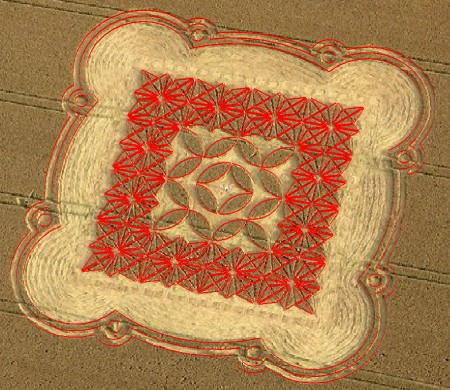
Reconstruction of the
2009 Morgan's Hill (2) formation |
|
| 1. |
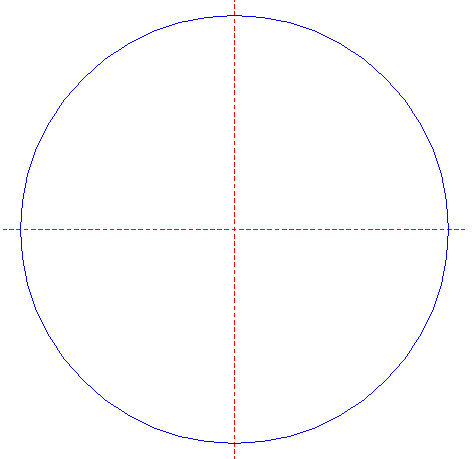
| Draw a circle. Draw and extend the horizontal and vertical centerlines.
|
|
| 2. |
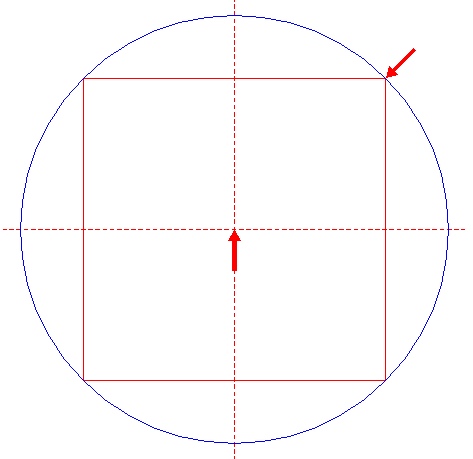
| Construct the inscribed square of circle 1, sides horizontal and vertical.
|
|
| 3. |
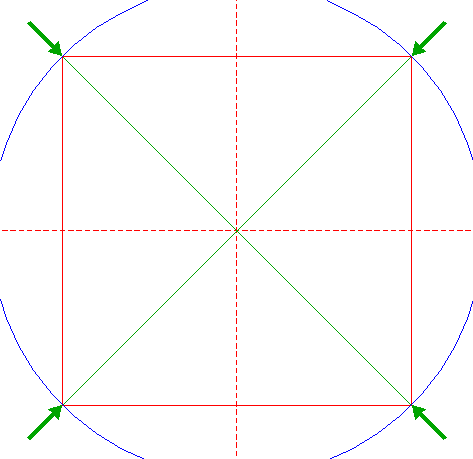
| Draw the two diagonals of square 2.
|
|
| 4. |
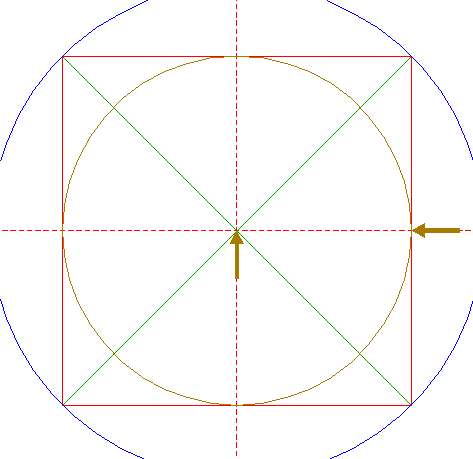
| Construct the inscribed circle of square 2.
|
|
| 5. |
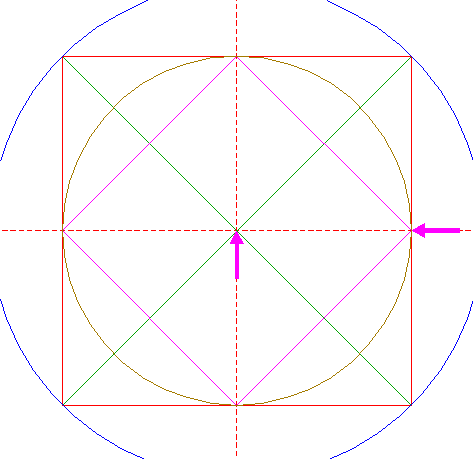
| Construct the inscribed square of circle 4, pointing to the right.
|
|
| 6. |
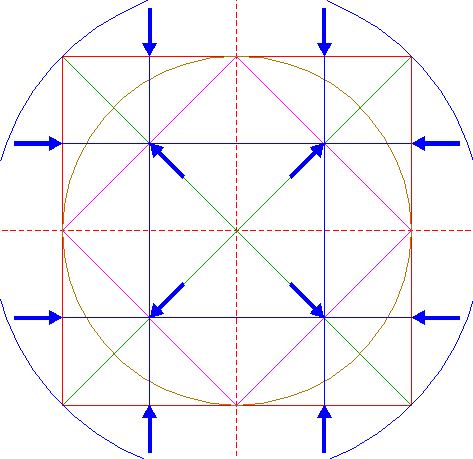
| Draw the horizontal and vertical connecting lines between the intersections of diagonals 3 and square 5, and extend these lines up to square 2.
Notice, that these lines and the horizontal and vertical centerlines divide square 2 into sixteen equal squares.
|
|
| 7. |
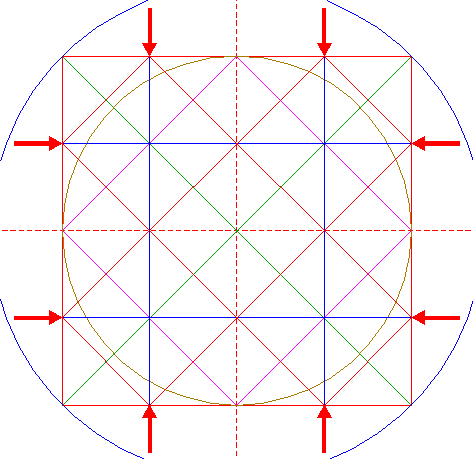
| Draw all (other) diagonals of the sixteen squares (of step 6).
|
|
| 8. |
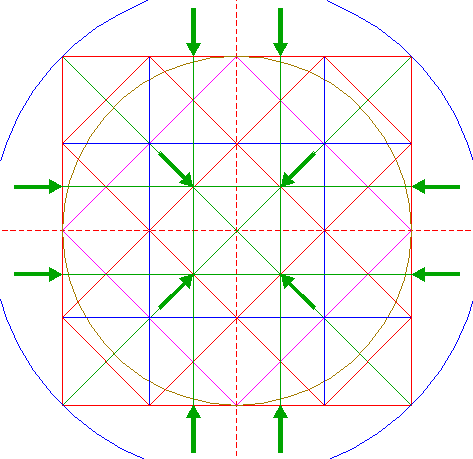
| Draw the horizontal and vertical connecting lines between the innermost intersections of diagonals 3 and 7, and extend these lines up to square 2.
|
|
| 9. |
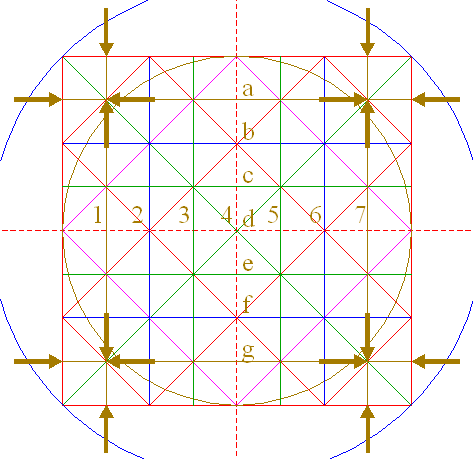
| Draw the horizontal and vertical connecting lines between the outermost intersections of diagonals 3 and 7, and extend these lines up to square 2.
Number all equidistant vertical lines inside square 2 (including the vertical centerline) 1 trough 7 from left to right. Number all equidistant horizontal lines inside square 2 (including the horizontal centerline) a through g from top to bottom. As shown.
|
|
| 10. |
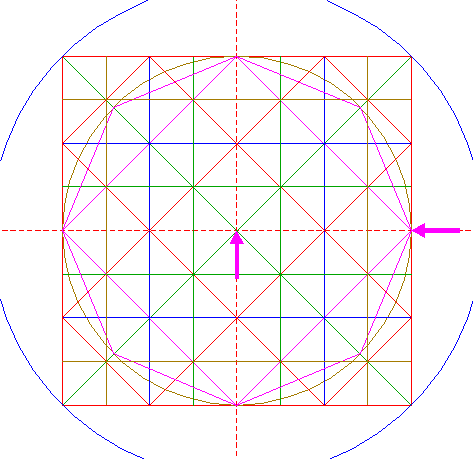
| Construct the inscribed octagon (regular 8-sided polygon) of circle 4, pointing to the right.
|
|
| 11. |
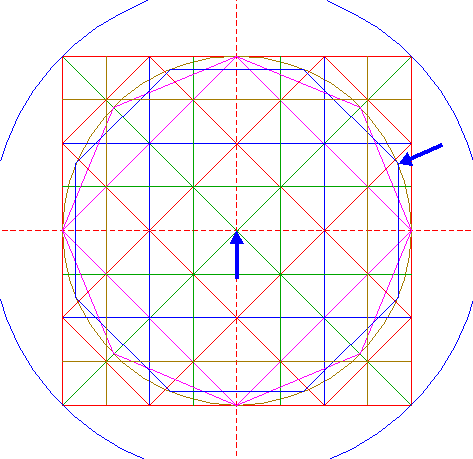
| Construct the inscribed octagon of circle 4, with two sides horizontal and two sides vertical.
|
|
| 12. |
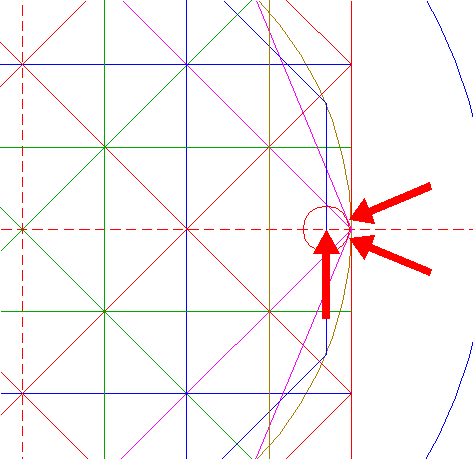
| Construct a circle centered at the intersection of the righthand side of octagon 11 and the horizontal centerline, tangent to the righthand sides of octagon 10.
|
|
| 13. |
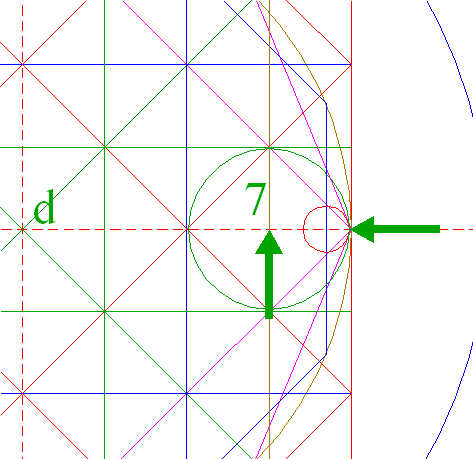
| Construct a circle centered at intersection d7 (of lines d and 7 of step 9), tangent to circle 12 at the righthand side.
|
|
| 14. |
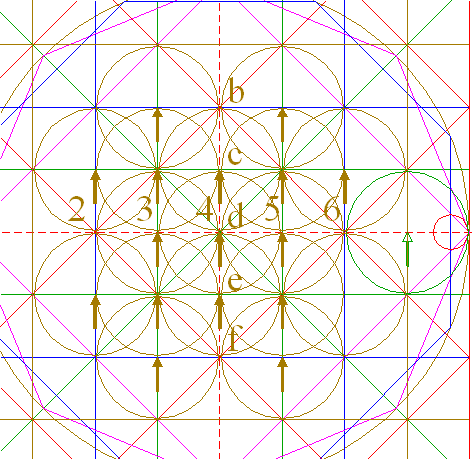
| Copy circle 13 seventeen times, to intersections b3, b5, c2, c3, c4, c5, c6, d3, d4, d5, e2, e3, e4, e5, e6, f3 and f5.
|
|
| 15. |
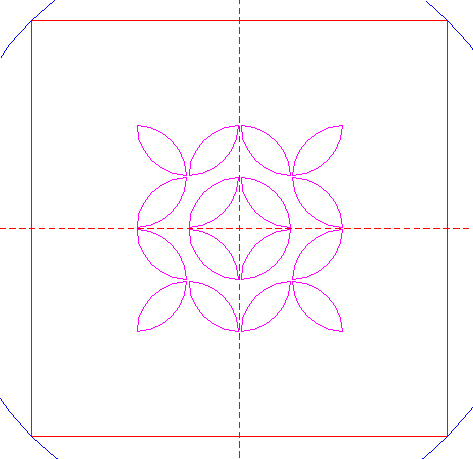
| Remove from circles 14 all parts not visible within the formation itself.
|
|
| 16. |
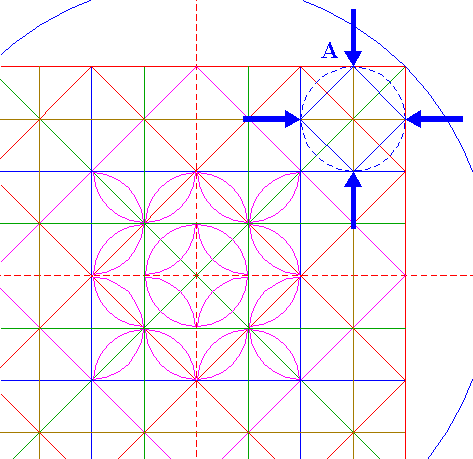
| Find the upper righthand square as mentioned in step 6 and call it square A. Construct the inscribed square of (the inscribed circle of) square A, by drawing four lines connecting the mid-points of its sides, as shown.
|
|
| 17. |
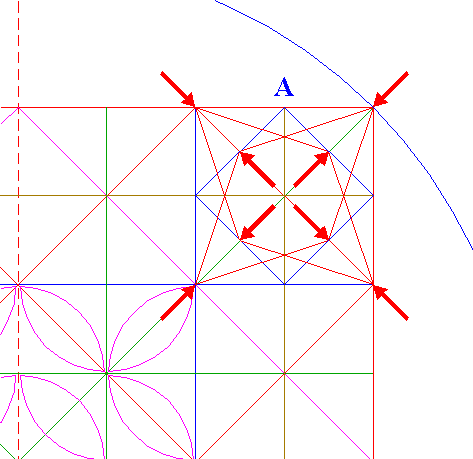
| Draw eight lines, from the angular points of square A to the mid-points of lines 16, as shown.
|
|
| 18. |
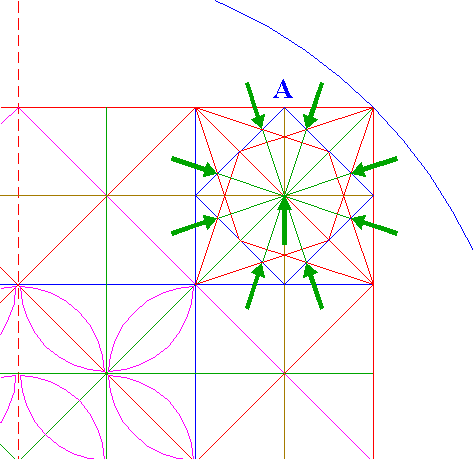
| Draw eight rays, from the center of square A to the intersections of lines 16 and 17, as shown.
|
|
| 19. |
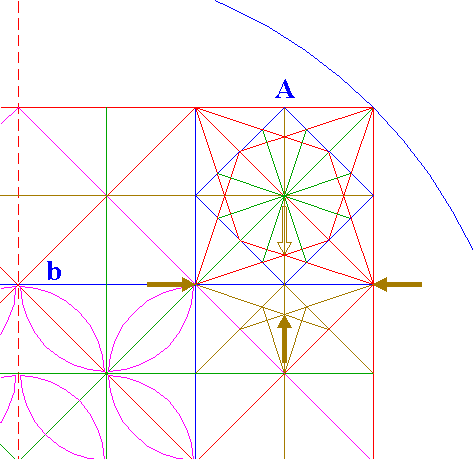
| Copy the lower two lines 16, the lower two lines 17 and the lower two rays 18, while mirroring these lines with respect to line b, as shown.
|
|
| 20. |

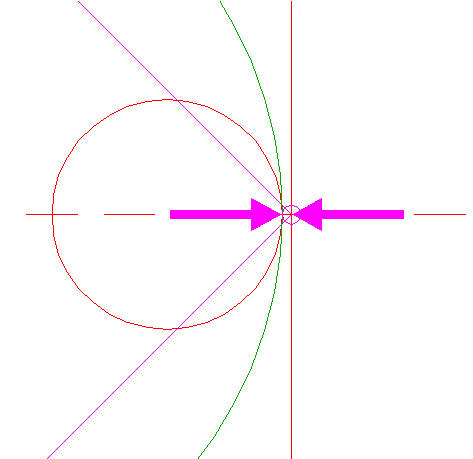
| Construct a (small) circle centered at the intersection of the righthand side of square 2 and the horizontal centerline, tangent to circle 12 at the righthand side. See detail.
|
|
|
|
| 21. |

| Copy circle 20 twentyfive times, to the intersections of lines 16, 17, 18 and 19, as is shown in the diagram.
|
|
| 22. |
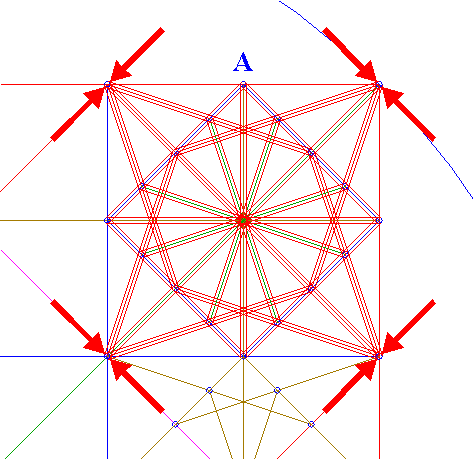
| Draw eighteen pairs of parallel lines, each pair parallel to one of the lines inside square A, and tangent to the corresponding circles 21 at both sides, as shown (with some examples).
|
|
| 23. |
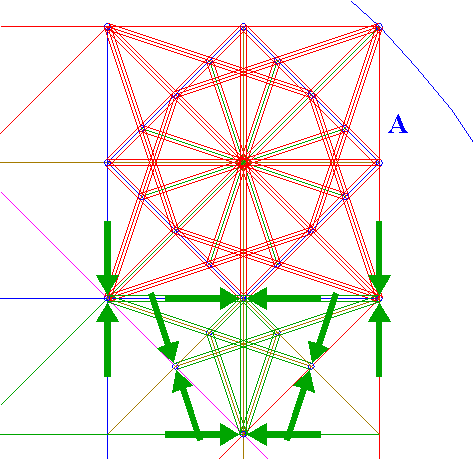
| Repeat step 22 for all lines 19 and the lines in between these and square A, as shown (with some examples).
|
|
| 24. |
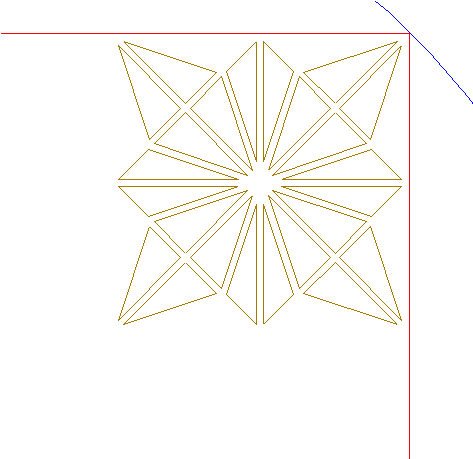
| Remove from lines 22 all parts not visible within the formation itself.
|
|
| 25. |

| Remove from lines 23 all parts, except for the four horizontally oriented triangles, as can be seen within the formation itself, as shown.
|
|
| 26. |
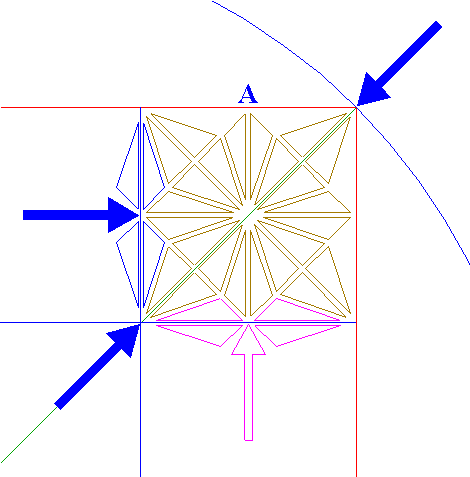
| Copy pattern 25, while mirroring with respect to the diagonal 3 from lower left to upper right, as shown.
|
|
| 27. |
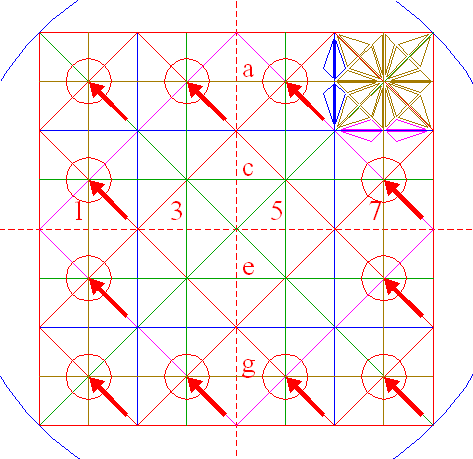
| Construct eleven circles with arbitrary radius, centered at intersections a1, a3, a5, c1, c7, e1, e7, g1, g3, g5 and g7.
|
|
| 28. |
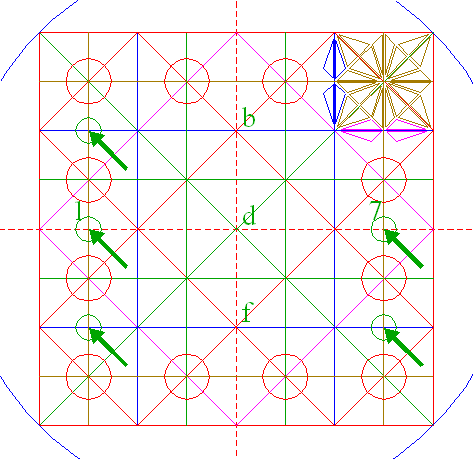
| Construct five circles with arbitrary radius, centered at intersections b1, d1, d7, f1 and f7.
|
|
| 29. |
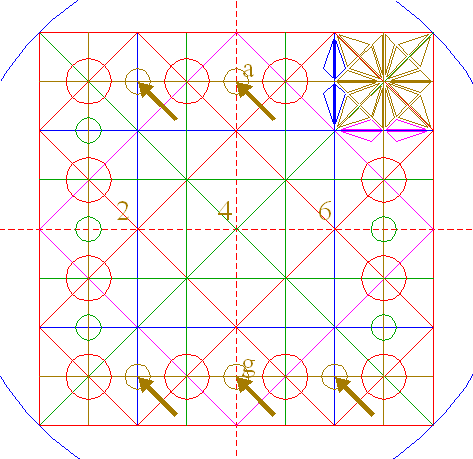
| Construct five circles with arbitrary radius, centered at intersections a2, a4, g2, g4 and g6.
|
|
| 30. |
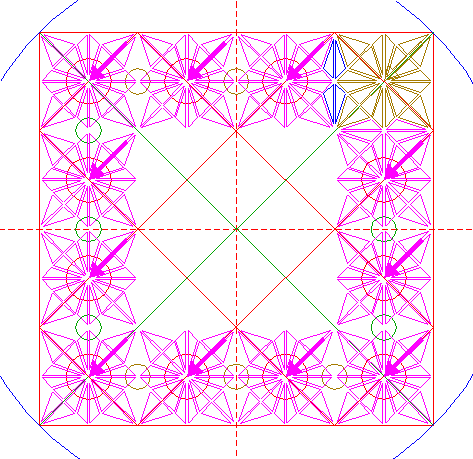
| Copy pattern 24 eleven times, from its center to the centers of circles 27.
|
|
| 31. |
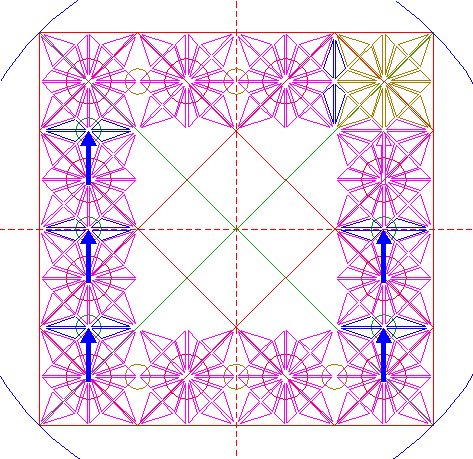
| Copy pattern 25 five times, from its center to the centers of circles 28.
|
|
| 32. |
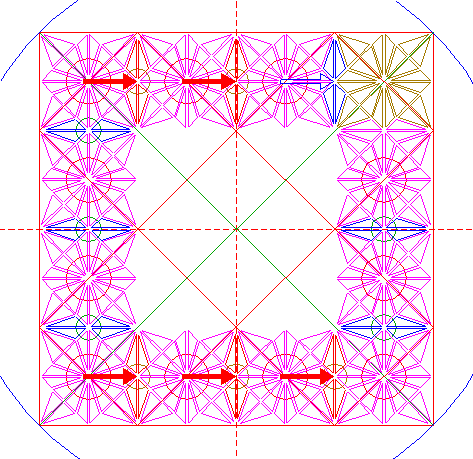
| Copy pattern 26 five times, from its center to the centers of circles 29.
|
|
| 33. |
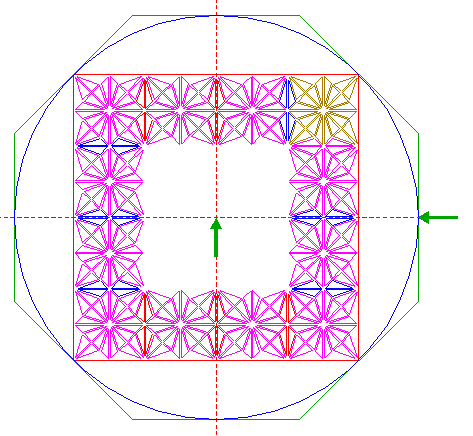
| Construct the circumscribed octagon of circle 1, with two sides horizontal and two sides vertical.
|
|
| 34. |
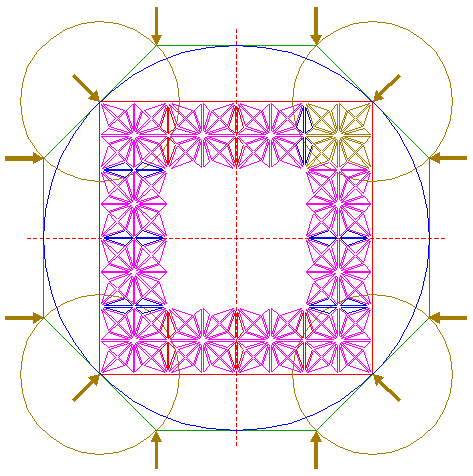
| Construct four circles centered at the angular points of square 2, passing through the adjacent angular points of octagon 33.
|
|
| 35. |
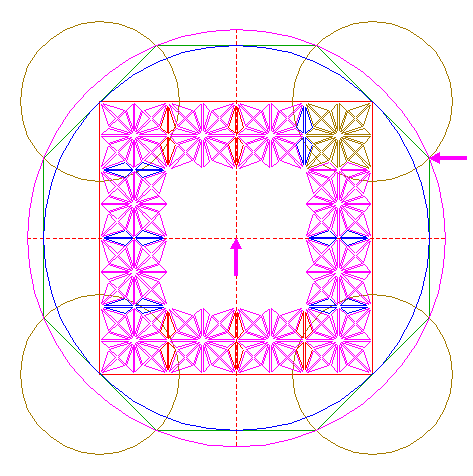
| Construct the circumscribed circle of octagon 33.
|
|
| 36. |
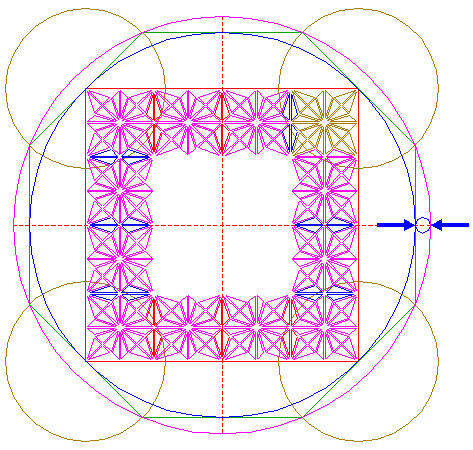
| Construct a "two-points" circle (defined by the end-points of a centerline) between the righthand intersections of circles 1 and 35 with the horizontal centerline.
|
|
| 37. |
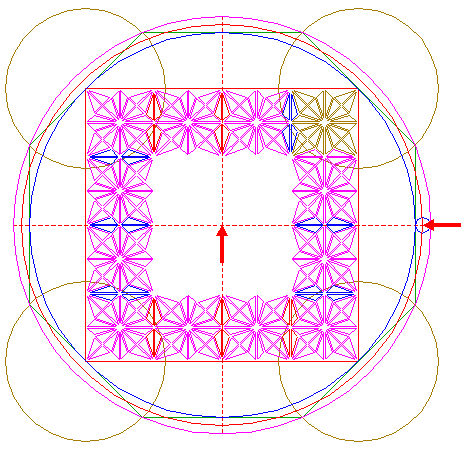
| Construct a circle concentric to circle 1, passing through the center of circle 36.
|
|
| 38. |
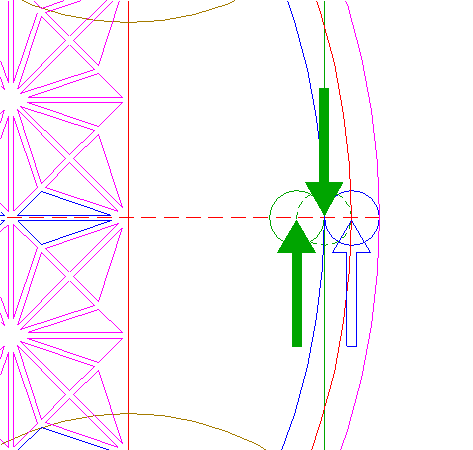
| Copy circle 36 to its lefthand intersection with the horizontal centerline, and move this circle (copy and delete original) to its own corresponding intersection.
|
|
| 39. |
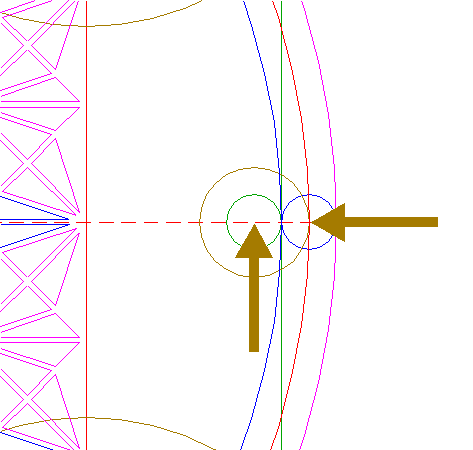
| Construct a circle concentric to circle 38, tangent to circle 37 at the righthand side.
|
|
| 40. |
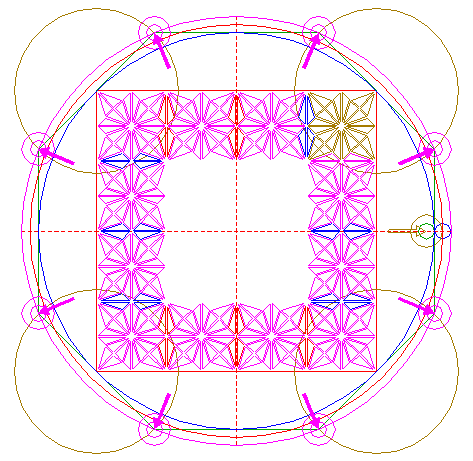
| Copy circles 38 and 39 eight times, to the angular points of octagon 33.
|
|
| 41. |
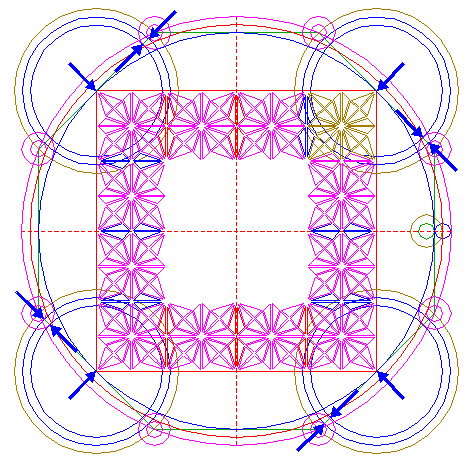
| Construct four pairs of circles, each pair concentric to one of circles 34, tangent to adjacent circles 40 at the near sides, as shown.
|
|
| 42. |
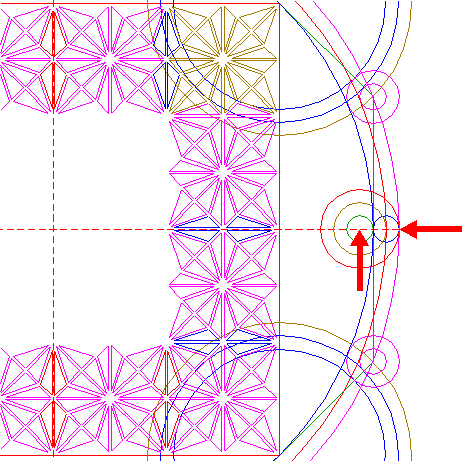
| Construct a circle concentric to circle 38, tangent to circle 35 at the righthand side.
|
|
| 43. |

| Copy circle 42 eight times, to the centers of circles 40.
|
|
| 44. |
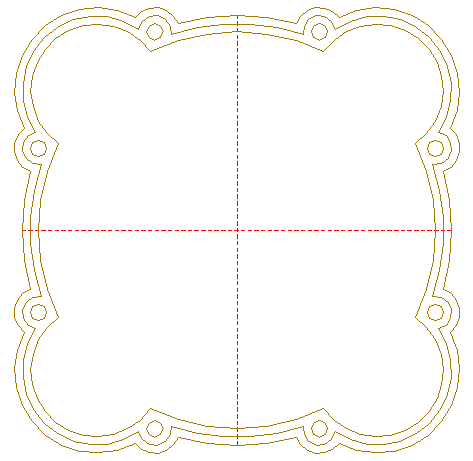
| Remove from circles 1, 34, 35, 37, 40, 41 and 43 all parts not visible within the formation itself.
|
|
| 45. |
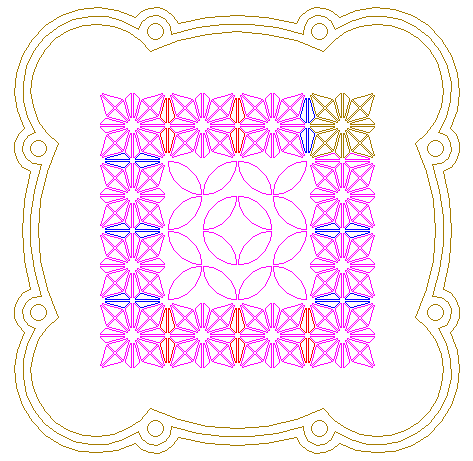
| Patterns 15, 24, 25, 26, 30, 31, 32 and 44 together make up the final reconstruction.
|
|
| 46. |

| Colour all areas corresponding to standing...
|
|
| 47. |
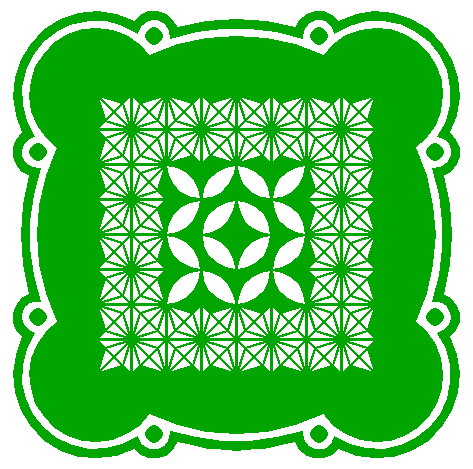
| ...or to flattened crop and finish the reconstruction of the 2009 Morgan's Hill (2) formation.
|
|
| 48. |
| The final result, matched with the aerial image.
|