|
|
|
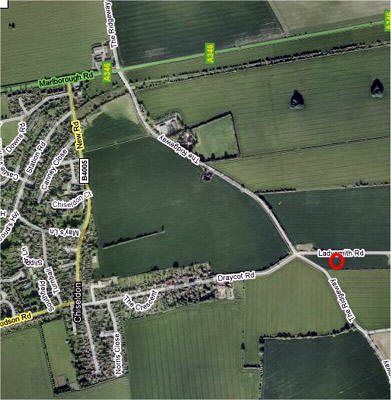
Chiseldon, nr
Draycott Foliat,
Wiltshire. reported 17th July.
Map Ref:
Updated Thursday 7th August 2008 |
|
| AERIAL SHOTS |
GROUND SHOTS |
DIAGRAMS |
FIELD REPORTS |
ARTICLES |
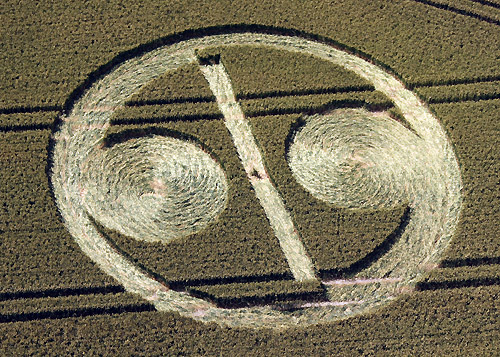
Image Gary King -
WCCSG Copyright 2008
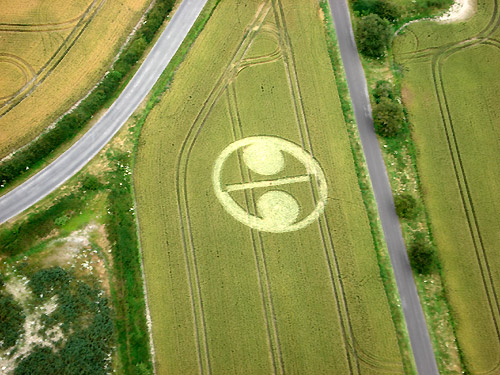
Image Simeon Hein Copyright 2008
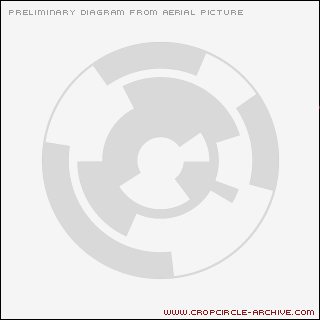
Diagram
Bertold Zugelder Copyright 2008

http://www.kornkreise-forschung.de
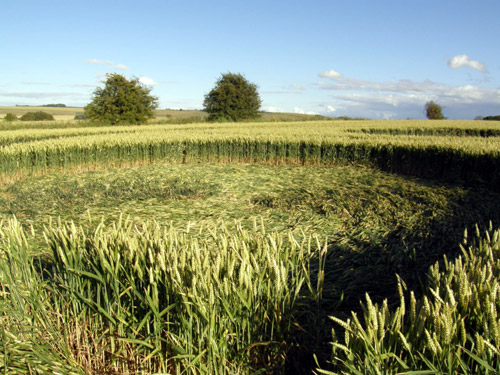
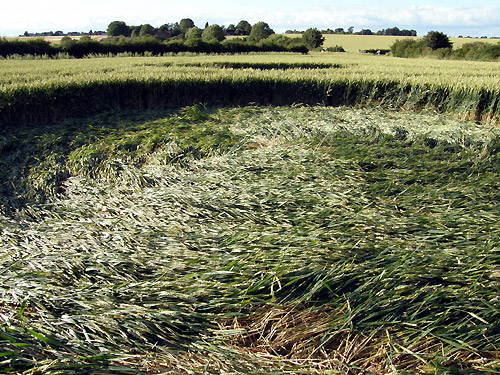

Images Craig Neville Copyright
2008
|
I noticed a crop circle between
Chiseldon and Draycott Foliat this evening (Thursday 17th July) as I was driving my
bus. It does not look like a big one, maybe 20 metres across,
and it looks like it may be a yin yang pattern, however from my
bus, I was unable to get a proper look. It is in wheat crop. I
doubt that I will be able to go take a closer look at it until
Sunday at the earliest.
UPDATE
The Chiseldon circle measures
29metres across (94 feet), and from the ground looks like a
symbol, mirrored symmetrically on the other side, divided by a
line that spans almost completely across the centre. Surrounding
this pattern is a ring, which contains laid crop in both
clockwise and anti-clockwise directions. In the very centre of
the formation stands a tuft of wheat, wound anti-clockwise up
the shaft. I could find no evidence of any post holes, or
footprints within or surrounding the formation, which is messy
in places.
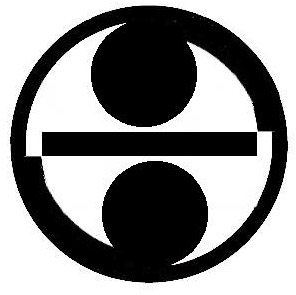
Diagram Craig Neville Copyright
2008
Craig Neville |
|
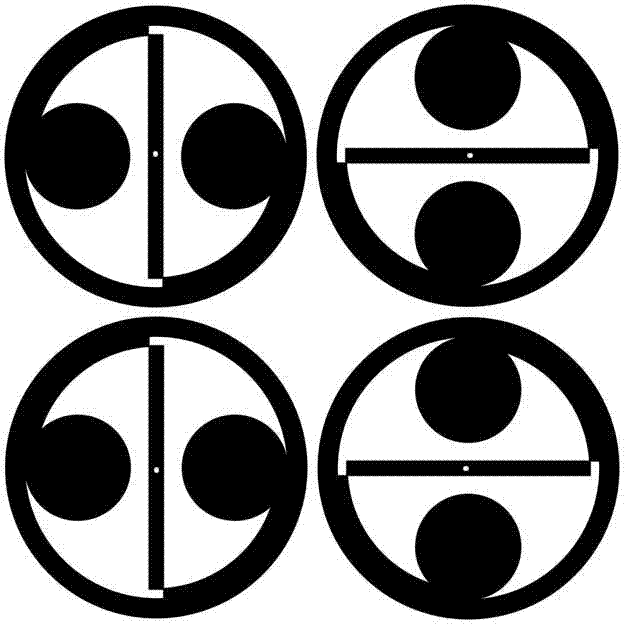
I think the Chiseldon circle is the the sign of
"cancer" in astrology. It is quite a playful puzzle if you ask me,
having appeared on July. I'd recognize it anywhere coz I'm Cancerian.
also, I spanned the circle and stared at the dot in the centre of it and
it made so many images and visions in my mind. Try staring at the centre
and looking at a blank piece of paper or surface and you'll see what I
mean.
chot ulep |
|
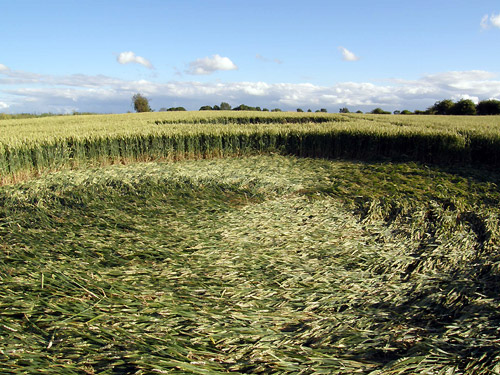

Images Craig Neville Copyright
2008

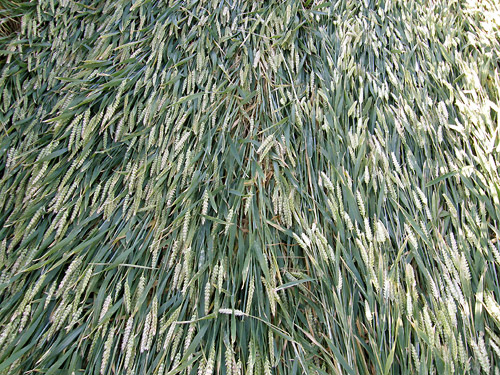
Images Craig Neville Copyright
2008
COMMENTS
Just
a guess
…….

30:13 ·
In eighteenth-century chemistry, and also
in late alchemical contexts, this sign stands for
sal
alcalinus, or
alkaline salt,
i.e. salts of alkali, meaning foremost
potassium
and sodium.
Formerly
all compounds that could be dissolved in less than 500 parts
of water were called
salts.
According
to Diderot's
Encyclopaedia
this sign meant
sea
salt.
John Broeckaert |
| AERIAL SHOTS |
GROUND SHOTS |
DIAGRAMS |
FIELD REPORTS |
ARTICLES |
|
|
BACK |

Mark Fussell & Stuart Dike |
|
 |



