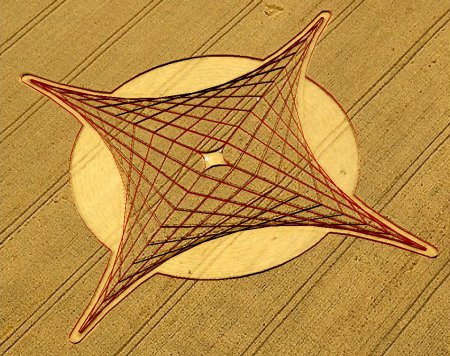
2006 Etchilhampton Hill formation






|
Reconstruction of the 2006 Etchilhampton Hill formation | ||
| 1. |
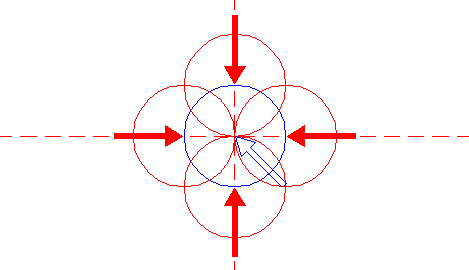
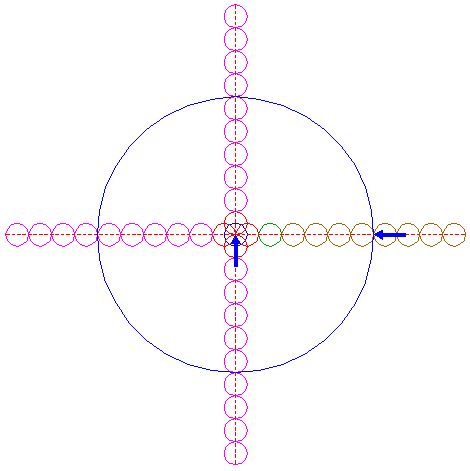
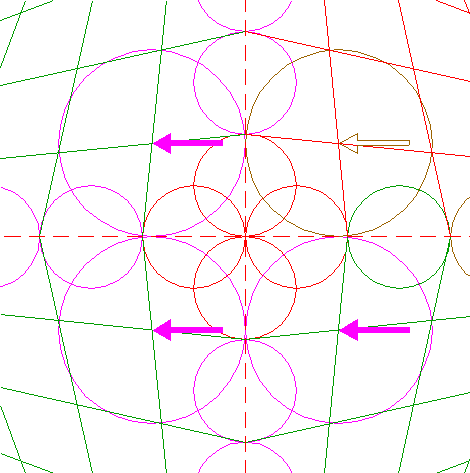
| Draw a circle. Draw and extend the horizontal and vertical centerlines. |
| 2. |
| Copy circle 1 four times, to the intersections of circle 1 and the horizontal and vertical centerlines. |
| 3. |
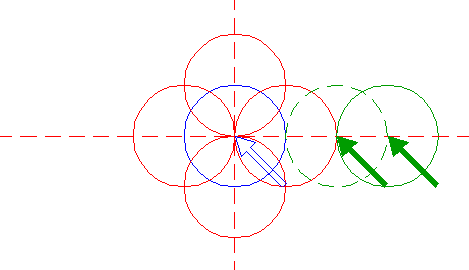
| Copy circle 1 to the righthand intersection of righthand circle 2 and the horizontal centerline. Move this circle (copy and delete original) to its own righthand intersection. |
| 4. |
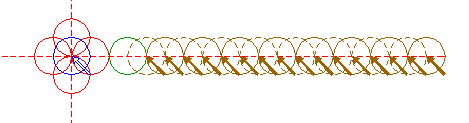
| Repeat step 3 eight more times, to create (together with righthand circle 2 and circle 3) ten tangent circles on a row, as shown. |
| 5. |
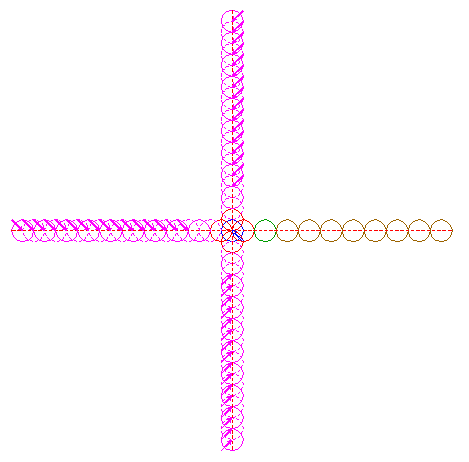
| Repeat steps 3 and 4 relative to the other three circles 2, and in the other three directions, horizontally and vertically. This will yield twenty tangent circles on a row, horizontally as well as vertically, as shown. |
| 6. |
| Construct a circle concentric to circle 1, passing through the intersection of the fourth and fifth circle 4. |
| 7. |
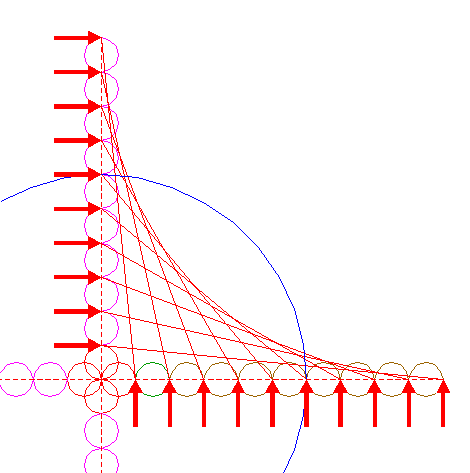
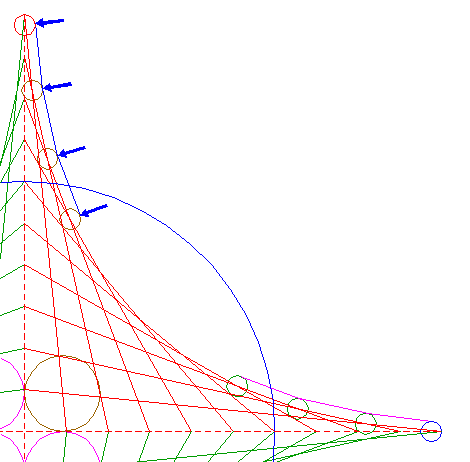
| Draw ten lines, the first from the upper intersection of the first of circles 2 and 5 vertically (up) and the vertical centerline to the righthand intersection of the last circles 2 and 4 (horizontally) and the horizontal centerline, the second from the corresponding intersections of the second of circles 2 and 5 to the second last circles 2 and 4, and so on, as shown. |
| 8. |
| Repeat step 7 three times, for the other three quadrants, as shown. |
| 9. |
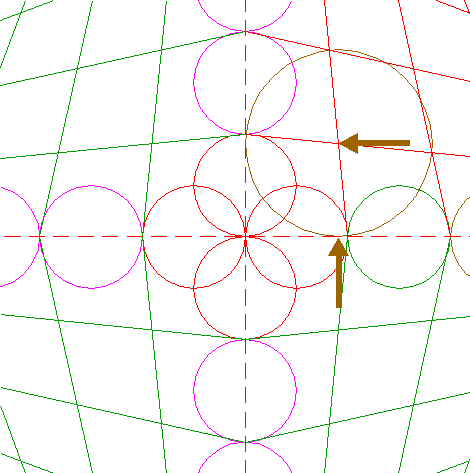
| Construct a circle centered at the intersection of the first and last lines 7, tangent to the horizontal centerline. |
| 10. |
| Copy circle 9 three times, to the corresponding intersections in the other three quadrants. |
| 11. |
| Construct a circle centered on the horizontal centerline, passing through the center of the rightmost circle 4, and through its righthand intersection with the horizontal centerline. |
| 12. |
| Repeat step 11 three times, for the three other corresponding circles on the horizontal and vertical centerlines, as shown. |
| 13. |
| Copy circle 11 three times, to the intersections of the first and second, second and third, and third and fourth lines 7. |
| 14. |
| Repeat step 13 for the last four lines 7, as shown. |
| 15. |
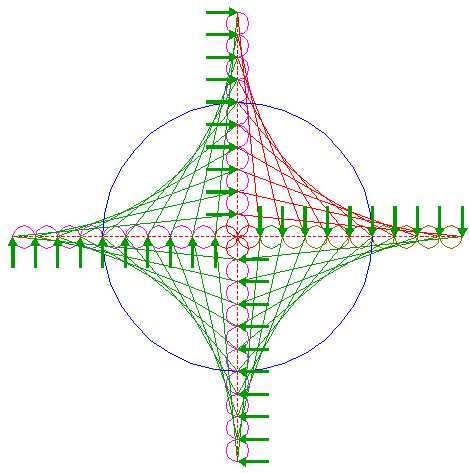
| Draw three lines, tangent to circle 11 and successive circles 13, all at the upper sides, as shown. |
| 16. |
| Repeat step 15, for upper circle 12 and successive circles 14, all at the righthand sides. |
| 17. |
| Repeat steps 13 and 14 three times, for the other three quadrants. |
| 18. |
| Repeat steps 15 and 16 three times, for the other three quadrants. |
| 19. |
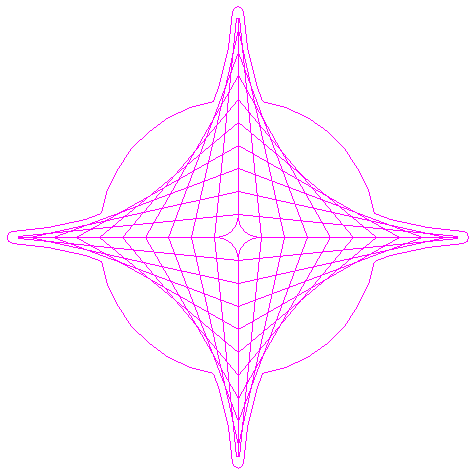
| Circles 6, 9, 10 11 and 12, lines 7, 8, 15, 16 and 18, and the horizontal and vertical centerlines make up all the required elements for the reconstruction. |
| 20. |
| Remove all parts not visible in the formation itself. |
| 21. |
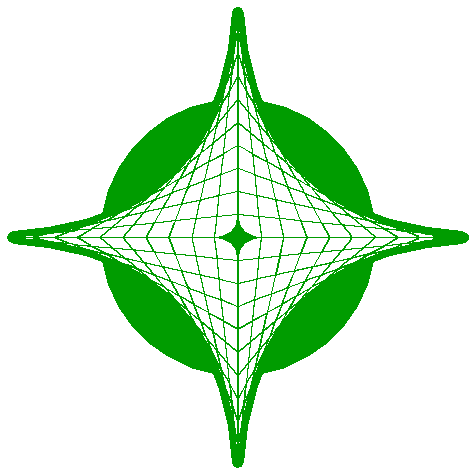
| Colour all areas corresponding to standing... |
| 22. |
| ...or to flattened crop, which will finish the reconstruction of the 2006 Etchilhampton Hill formation. |
| 23. |
| The final result, matched with the aerial image. |
| Copyright © 2006, Zef Damen, The Netherlands |