2001 Woodborough Hill (2) formation









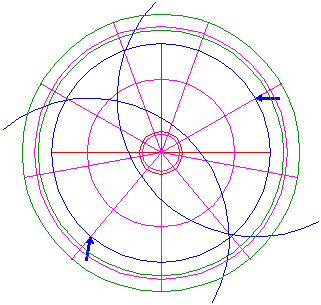
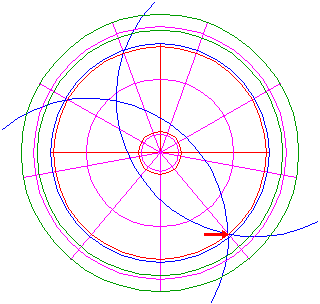
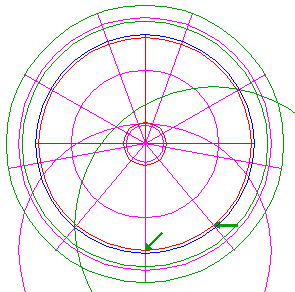

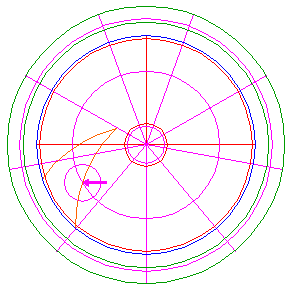


|
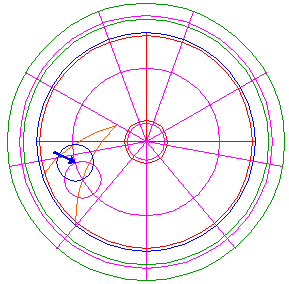
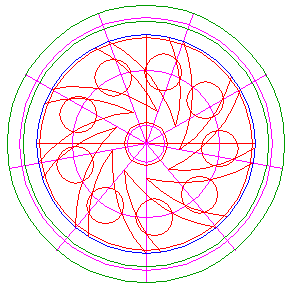
Reconstruction of the 2001 Woodborough Hill (2) formation | ||
| 1. | |
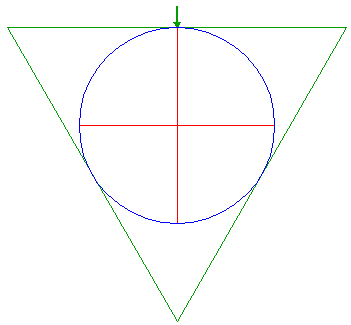
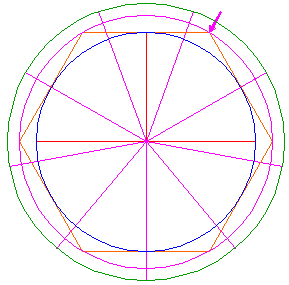
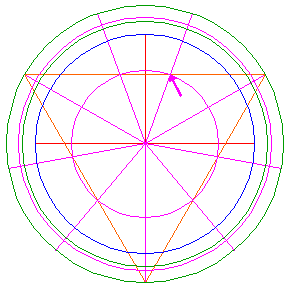
Draw a circle. |
| 2. | |
Draw the horizontal and vertical centerlines. |
| 3. | |
Construct the circumscribed equilateral triangle of circle 1, pointing downwards. |
| 4a. | |
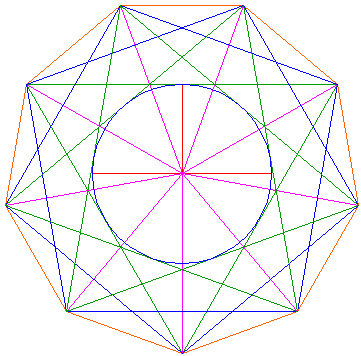
Construct the circumscribed nonagon (regular 9-sided polygon) of equilateral triangle 3, such that angular points of both coincide, as shown. |
| 4b. | |
Construct the other two equilateral triangles, inscribed in nonagon 4a, the angular points of which coincide also with those of the nonagon, as shown. |
| 5. | |
Draw the nine rays of nonagon 4a. |
| 6. | |
Draw the diagonals of nonagon 4a, connecting every second angular point. |
| 7. | |
From the intersections of rays 5 and diagonals 6 of nonagon 4a (forming another nonagon in itself), draw the corresponding diagonals, parallel to diagonals 6. |
| 8. | |
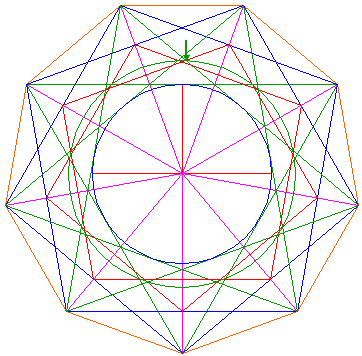
Construct a circle concentric with circle 1, passing through the intersections of diagonals 7 and sides of equilateral triangles 3 and 4b, as shown. |
| 9. | |
Construct the circumscribed hexagon (regular 6-sided polygon) of circle 1. |
| 10. | |
Construct the circumscribed circle of hexagon 9. |
| 11. | |
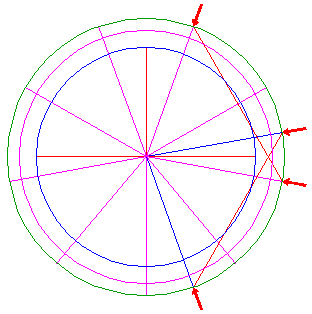
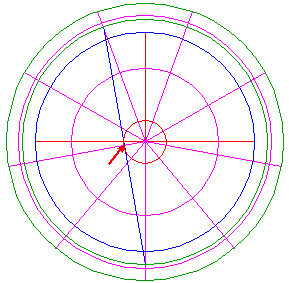
Extend rays numbered "3" and "5" (counterclockwise from the horizontal centerline on the right), until they meet circle 1 at the opposite side, as shown. |
| 12. | |
Draw a line connecting the end-points of the extended rays and a line connecting the end-points of the two rays, mirrored in relation to the horizontal centerline, as shown. |
| 13. | |
Construct a circle concentric to circle 1, passing through the intersection of lines 12, as shown. |
| 14. | |
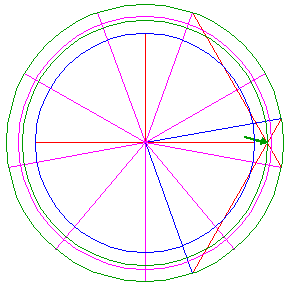
Construct the inscribed equilateral triangle of circle 8, pointing down. |
| 15. | |
Construct a circle concentric to circle 1, passing through the intersections of the sides of triangle 14 and rays 5. |
| 16. | |
Draw the connecting line between the intersections of rays "3" and "7" (see step 11) and circle 13, as shown. |
| 17. | |
Construct a circle concentric to circle 1, tangent to line 16. |
| 18. | |
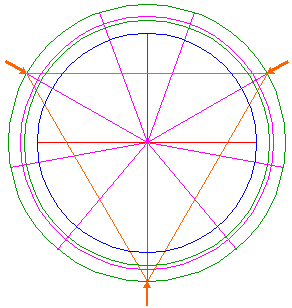
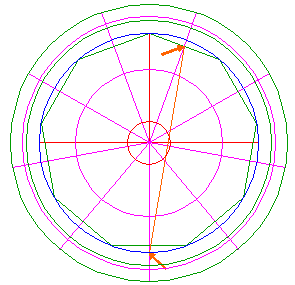
Construct the inscribed nonagon of circle 1, pointing up. |
| 19. | |
Draw the connecting line between the lower intersection of circle 1 and the vertical centerline, and the intersection of nonagon 18 and ray "2", as shown. |
| 20. | |
Construct a circle concentric to circle 1, tangent to line 19. |
| 21. | |
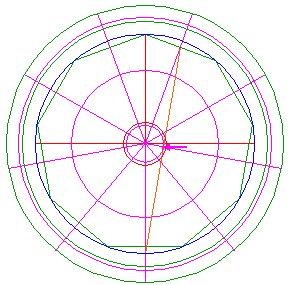
Copy circle 8 two times, one each to the intersections of circle 1 with rays "1" and "6", as shown. |
| 22. | |
Construct a circle concentric to circle 1, passing through the intersection of circles 21 closest to circle 1, as shown. |
| 23. | |
Copy circle 8 another time to the intersection of circle 22 and ray "8". Copy circle 10 to the intersection of circle 22 and ray "7", as shown. |
| 24. | |
Clip off the parts of circles 23 outside circle 1 up to their mutual intersection, as shown. |
| 25. | |
Copy circle 20 to the intersection of the (remainder of the) copied circle 8 (step 23) and circle 15, as shown. |
| 26. | |
Copy circle 20 another time to the upper left intersection of circle 25 and circle 15, as shown. |
| 27. | |
Repeat steps 23 through 26 for all other pairs of (consecutive) rays, nine times in total. |
| 28. | |
Circles 1, 8, 10, 13, 17, 20, 24, 26 and 27 together form all the parts for the reconstruction. |
| 29. | |
Removing all elements not present in the final formation and making black relevant parts denoting standing crop, finishes the reconstruction of the 2001 Woodborough Hill (2) formation. |
| 30. | |
The final result, matched with the aerial image. |
| Copyright © 2001, Zef Damen, The Netherlands |