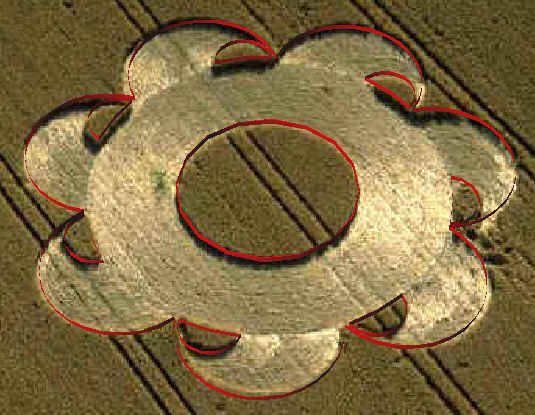
Reconstruction of the 1998 Danebury Hill formation
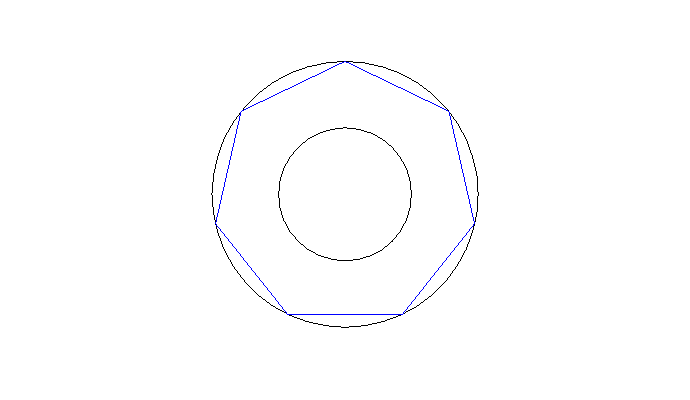
- Start drawing two concentric circles, a larger and a smaller one. The radius of the smaller one is half that of the larger.

- Construct a heptagon (7-sided regular polygon) inscribed within the larger circle.
- Draw the rays from the center of the heptagon to its corners.
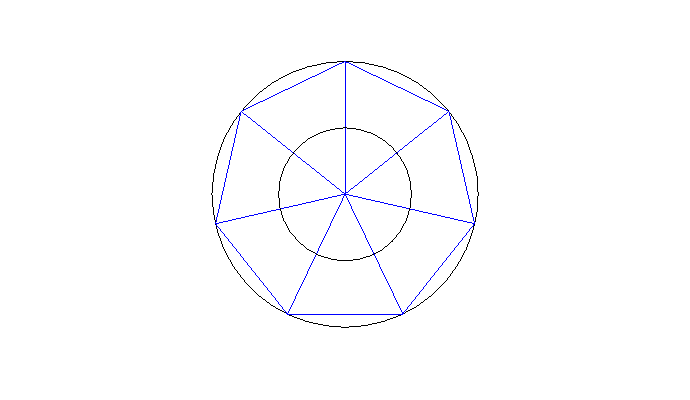
- Extend the rays across the center, until they touch the larger circle. The set of lines touch the larger circle at 14 points, regularly spaced, forming the corners of a regular 14-sided polygon.
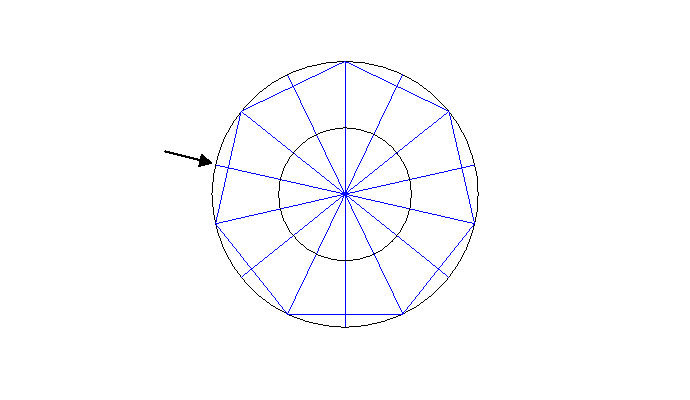
- Draw alternately half of the sides of this 14-sided regular polygon, as shown.

- Construct 7 circles, each going through adjacent corners of the heptagon and touching at the smaller inner circle (at the side closest to it).
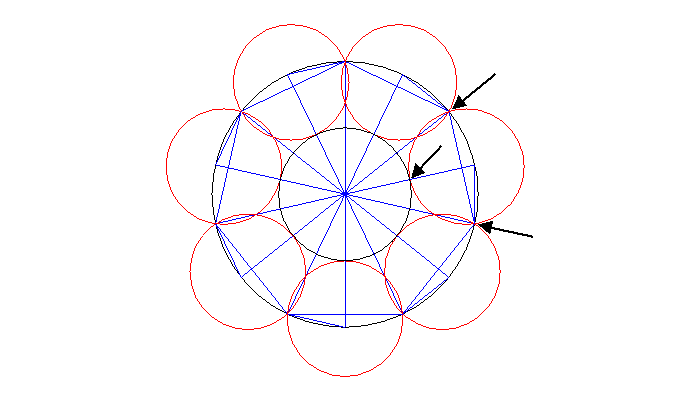
- Construct a small circle touching at two adjacent rays of the 14-sided polygon and also touching at the corresponding side of the heptagon (at the inner side), as shown.
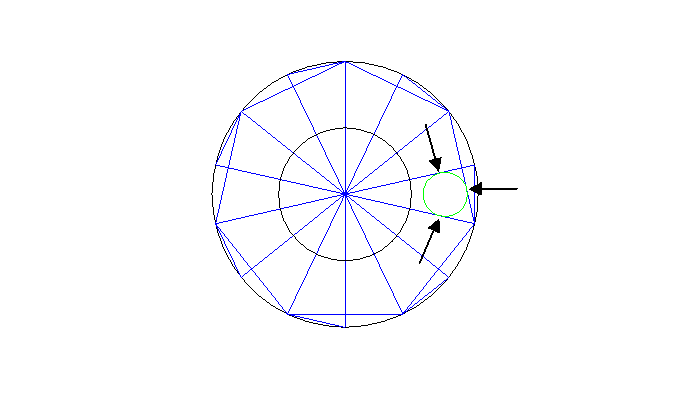
- Copy this circle and shift it such, that its center coincides with a corner of the heptagon.
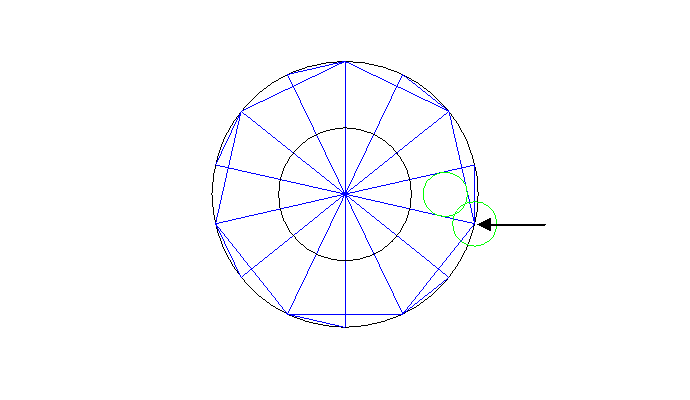
- Construct 7 circles concentric to the circles introduced in step 6, with a radius such that the new circle touches the small circle of the previous step (at the outer side), as shown.

- Copy and shift the small circles introduced in step 8 seven times such, that the centers coincide with the intersection of the last drawn circles (step 9) and the sides of the 14-sided polygon drawn in step 5, as shown.
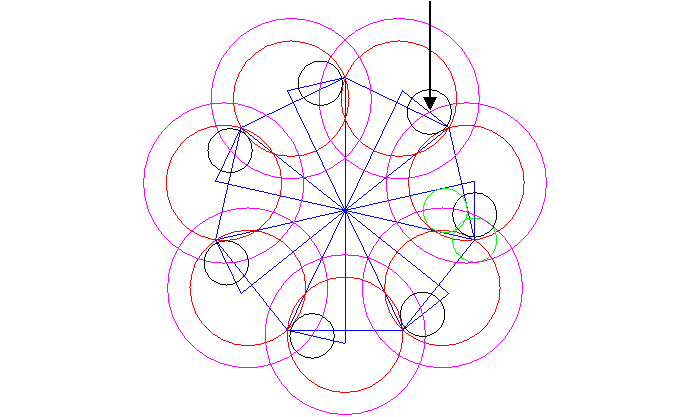
- Now, all the necessary ingredients are there.
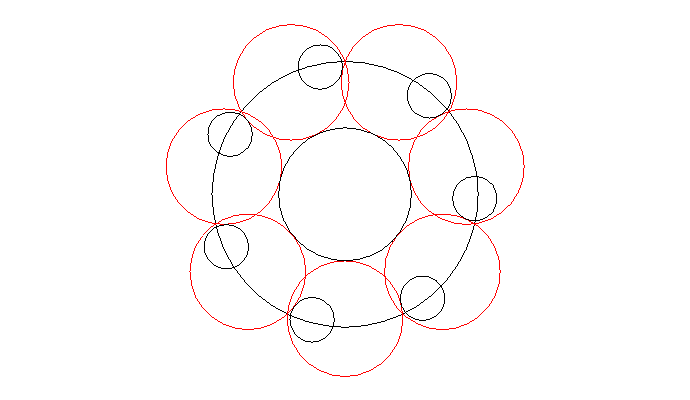
- Removing all redundant lines…

- …yields the reconstruction of the 1998 Danebury Hill formation.

- Matching the result with the original image (by Steve Alexander) shows a reasonably good fit.
© March 5, 2000 Zef Damen, Leidschendam, The Netherlands
e-mail: j.t.w.damen@hetnet.nl